16 VCs and Venture Voices Founders Should Follow on LinkedIn in 2027

Most founders don’t have a mentor who has seen a thousand pitch decks. LinkedIn is the next best thing, because a handful of investors and venture operators explain how they think there, for free.
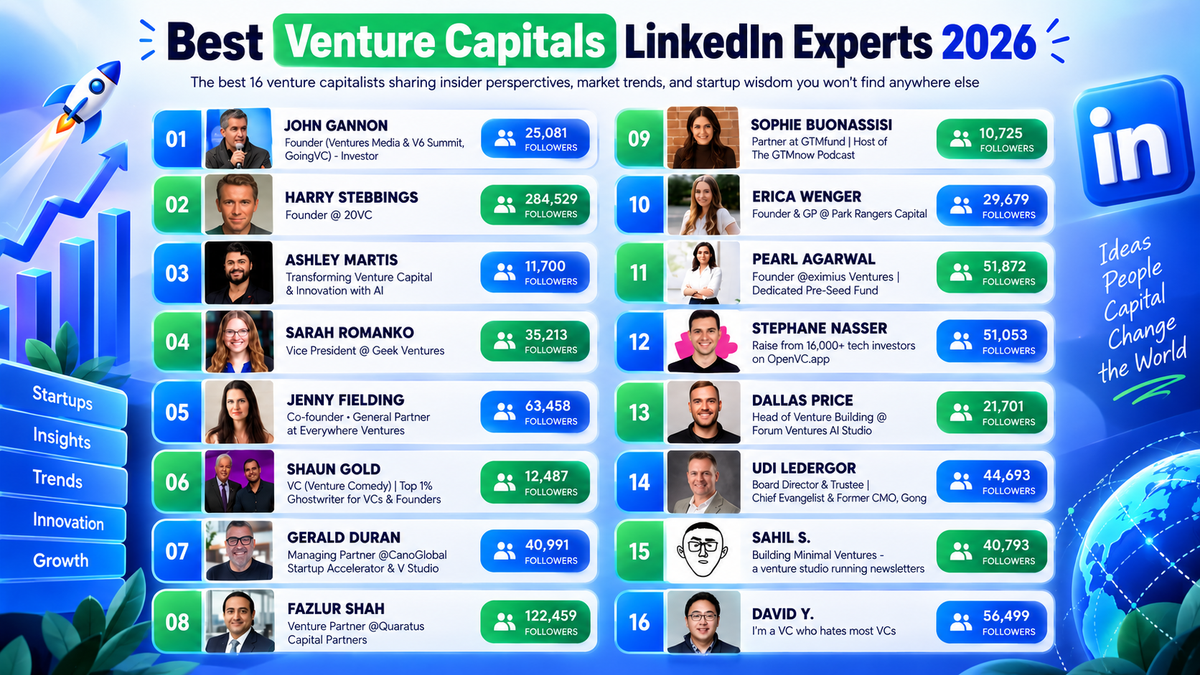
This list covers 16 people worth adding to your feed. Not all of them are traditional VCs, and that’s deliberate. Some run funds, some run studios, some build tools or media around venture. Each group teaches something different, so we’ve sorted them by what you can learn.
A quick note on how to read this list: it’s a starting point, not a ranking or a test of who gives the best advice. Titles and roles change often, so check each profile for current details before you act on anything.
Why follow investors at all?
Fundraising is an information game. Investors see patterns across hundreds of companies, and founders usually see only their own. Following investors publicly closes part of that gap. You learn what they find compelling, what makes them pass, and how they describe their own process.
There’s a catch worth keeping in mind. Investors post partly to build a brand and attract deal flow. That doesn’t make the advice bad, but it means their view is shaped by their fund size, stage, and sector. A seed investor’s advice on traction may not fit a Series B company. Treat posts as one input, not instructions.
The fund builders and investors
These are people running or co-running venture firms or funds. Their posts tend to reveal how investment decisions get made.
Harry Stebbings is the founder of 20VC. If you want exposure to how many different investors and operators think, his work is a common entry point.
Jenny Fielding is co-founder and General Partner at Everywhere Ventures. A GP is a general partner, the person who makes investment decisions and manages the fund. Following someone at that level shows you the investor’s side of the table.
Erica Wenger is the founder and GP of Park Rangers Capital.
Pearl Agarwal is the founder of Eximius Ventures.
Sarah Romanko is Vice President at Geek Ventures. Hearing from someone in a VP role can be useful, since they are often closer to day-to-day sourcing and evaluation than a founding partner.
Fazlur Shah is a Venture Partner at Quartus Capital Partners.
Gerald Duran is Managing Partner at CanaGlobal, a startup accelerator and venture studio.
Go-to-market voices
Plenty of startups fail to find customers rather than fail to build a product. These people focus on the “how do we sell this?” side.
Sophie Buonassisi is a Partner at GTMfund and hosts The GTMnow Podcast. GTM stands for go-to-market, meaning the plan for reaching and winning customers.
Udi Ledergor is Chief Evangelist and former CMO at Gong. He comes from the operator side of marketing at a software company, which is a different angle than an investor’s.
Studios and builders
A venture studio creates startups in-house instead of only funding outside founders. That model gives these people a hands-on view of early-stage building.
Dallas Price is Head of Venture Building at the Forum Ventures AI Studio.
Sahil S is building Minimal Ventures, a venture studio that runs newsletters.
Tools, data, and fundraising access
Stephane Nasser is co-founder of OpenVC. If you’re mapping which investors to approach, following someone who works on investor discovery can help you understand how that process works.
Media, community, and content craft
John Gannon is the founder of Venture5 Media, V5 Summit, and GoingVC. He’s a useful follow if you want the wider venture community and events scene.
Ashley Martis focuses on transforming venture capital and innovation with AI. That’s relevant if you want to see how investors are thinking about AI in their own workflows.
Shaun Gold describes himself as a VC (Venture Comedy) and a top 1% ghostwriter for VCs and founders. His presence on this list is a good reminder that some investor content is professionally crafted. That’s not a flaw, but it does mean polished posts reflect editing as well as opinion.
David Y. describes himself as a VC helping people scale their gifts and talents.
How to actually use this list
Following 16 people isn’t a strategy. Here’s a more practical approach.
- Pick three, not sixteen. Choose one voice for fundraising, one for go-to-market, and one wildcard. A crowded feed turns into noise.
- Match stage to source. Check whether the person invests at your stage before applying their advice.
- Look for patterns, not one-off posts. If three unrelated investors mention the same concern, take it seriously. A single viral post may not reflect how most investors think.
- Engage with substance. A thoughtful comment on a post is more memorable than a cold pitch in someone’s inbox. Don’t treat comments as a backdoor to funding, though.
- Cross-check claims. If someone shares a statistic or benchmark, look for the original source before you build a financial model around it.
Limits of learning from social feeds
LinkedIn rewards posts that travel, which isn’t always the same as posts that are right. Advice is often shortened to fit a feed, and it can omit context like market conditions, deal terms, or what happened to companies that did the opposite. Following investors can sharpen your thinking, but it can’t replace talking to customers, advisors who know your business, or a lawyer when you reach term sheets.
Frequently asked questions
Who are the best VCs to follow on LinkedIn for founders?
That depends on your stage and sector. This list includes investors, studio builders, and go-to-market voices, so start with the category that matches your biggest current problem.
Is it worth following VCs if you’re not raising yet?
Often yes. Understanding how investors evaluate companies early can shape how you track metrics and tell your story long before you pitch.
Do all the people on this list invest in startups?
No. Some run funds, while others run studios, media businesses, or marketing and writing practices tied to venture. The descriptions above reflect how each person presents themselves.
Can following a VC help me get funded?
It can improve your understanding of how investors think. It doesn’t create access or guarantee a response, and outreach should still be targeted and respectful.