💡Why Unicorns Break the Rules
🤖 10 People + AI = Billion Dollar Company?
In This Edition:
- 💡 Why Unicorns Break the Rules
- 🤖 10 People + AI = Billion Dollar Company?
- ⭐ 12 Hard Startup Truths from Chris Dixon
- 🛑How We Learned to Kill Bad Deals Early
- 🔥 How Smart Founders Create Investor FOMO
- 💰 The Most Valuable AI Startups in 2025
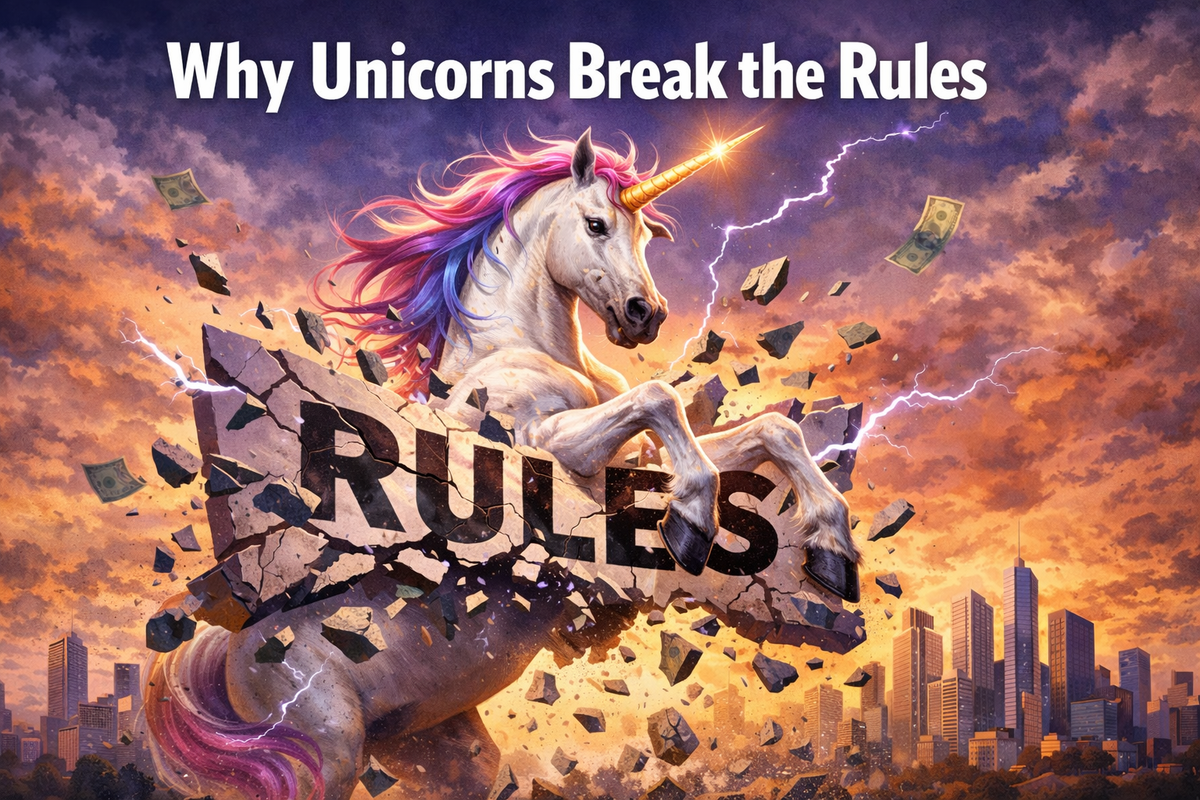
💡Why Unicorns Break the Rules
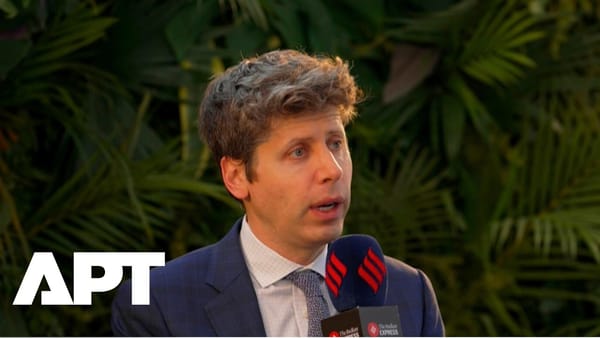
🚨The Startup Advice Sam Altman Regrets
Sam Altman once said something every founder should think about:
“I feel so bad about the advice I gave while running YC.”
That line matters—because most startup advice is designed to reduce risk, not maximize ambition.
The result?
Founders are often taught to think small.
You’ve heard the rules:
- Do things that don’t scale
- Raise as little as possible
- Find PMF in a tiny niche
Useful sometimes—but dangerous when treated as universal truth.
Even the biggest companies broke the “playbook”:
- OpenAI raised ~$1B before a clear product or revenue model
- Netflix took 9 years to become a streaming company
- Amazon started with books—but always thought bigger
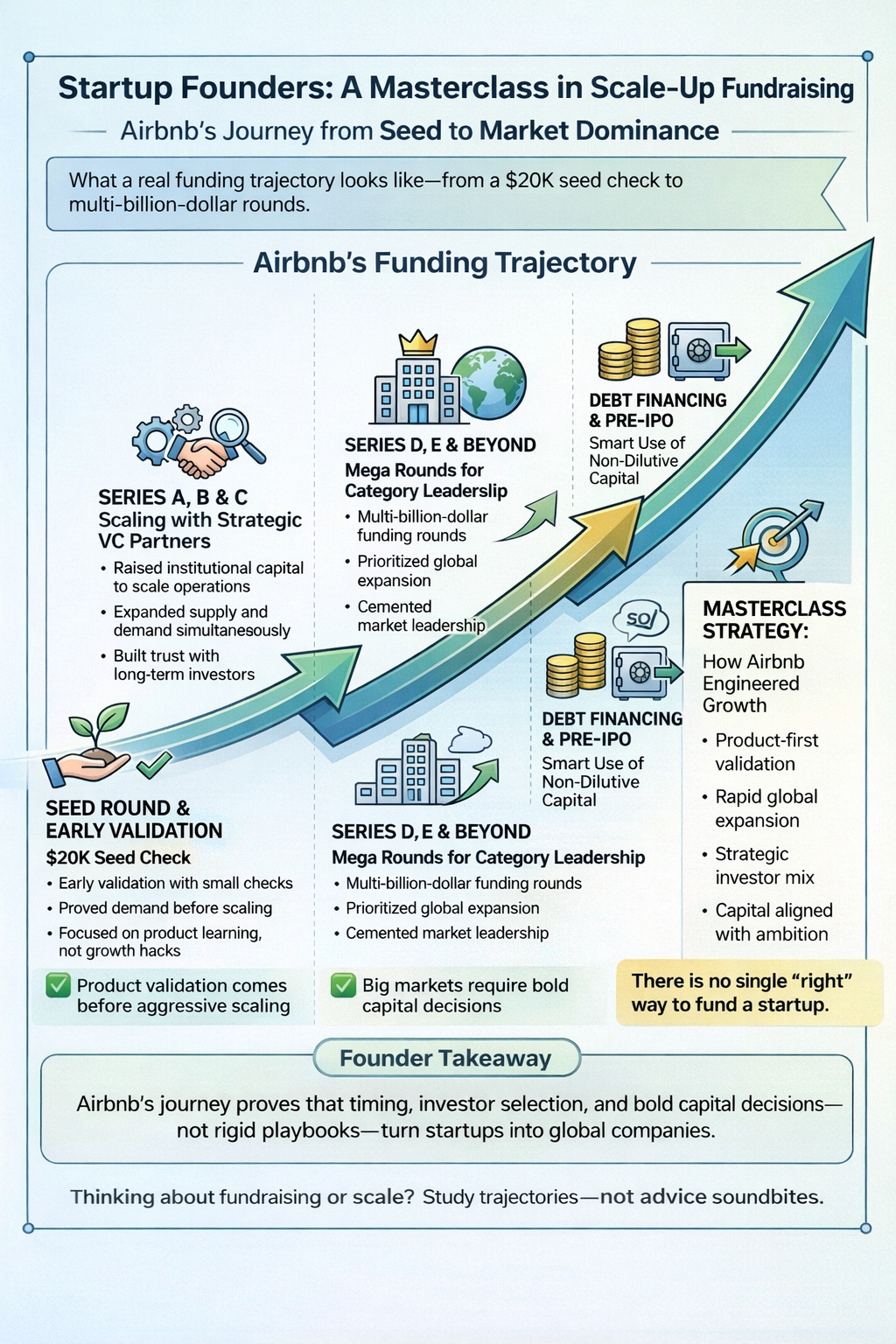
Advice is usually based on limited experience and then repeated until it sounds like law.
Even good advice becomes bad when it limits how big you allow yourself to think.
There is no reusable formula for building a category-defining company.
If you want to build something truly novel, you’ll need to:
- Filter advice, not collect it
- Think beyond what’s “proven”
- Accept more risk in exchange for more upside
You may increase your chances of failure—but also your chances of building something that actually matters.
Don’t let borrowed advice shrink your ambition. Build what you really want.
🤖 10 People + AI = Billion Dollar Company?
🔥Can 10 People + AI Build a Billion-Dollar Company?
Can 10 people + AI really build a billion-dollar company?
YC just had one of the most important conversations founders should pay attention to.
The short answer: AI changes how companies are built—but it doesn’t remove the need for strong founders, good judgment, or engineering thinking.
What founders should actually take away from this YC discussion:
1️⃣ AI is great at junior-level coding tasks (for now)
AI copilots are already excellent at:
- Fixing small bugs
- Writing boilerplate
- Speeding up routine dev work
But they still struggle with:
- Designing complex systems
- Handling messy real-world edge cases
- Building scalable architecture from scratch
2️⃣ Benchmarks matter—and progress is real
The big unlock for AI coding wasn’t hype—it was benchmarks like SWE-bench, similar to how ImageNet unlocked deep learning.
Now progress is measurable, competitive, and accelerating.
3️⃣ Coding ≠ typing code
Even if one day apps can be built by “writing English”:
- Ideas come from the building process
- Architecture, trade-offs, and taste still matter
- Writing (and coding) is thinking
This is why YC’s take is still clear: learning to code makes founders smarter, even in an AI-first world.
4️⃣ Will we see more 10-person unicorns? Maybe—but not for the reasons you think
AI may reduce some roles, but history shows:
- Efficiency increases demand, not reduces it
- Software got cheaper → more startups got built
- The bar for being a great founder actually goes up
5️⃣ The real opportunity: more founders, more shots on goal
AI lowers the cost of going from idea → prototype → first users.
That means:
- More people can start
- More companies can reach escape velocity
- More billion-dollar outcomes—not fewer
But ambition, taste, and craftsmanship remain the bottleneck.
The YC verdict is surprisingly old-school:
Learn to code.
Use AI.
Build with taste.
Think bigger.
If you’re a founder thinking about AI, team size, engineering, or the future of startups—watch the full YC video. It’s one of the most grounded, non-hype discussions on what AI really changes (and what it doesn’t).
⭐12 Hard Startup Truths from Chris Dixon
🚀 12 Hard Startup Truths from Chris Dixon
Most startup advice sounds safe in hindsight. Chris Dixon’s doesn’t. It’s uncomfortable, contrarian—and that’s exactly why it matters.
This synthesis of Dixon’s thinking reveals what actually separates venture-scale startups from ideas that quietly fade away. The central theme is simple but brutal: extraordinary outcomes come from non-consensus bets, deep conviction, and sustained discomfort.
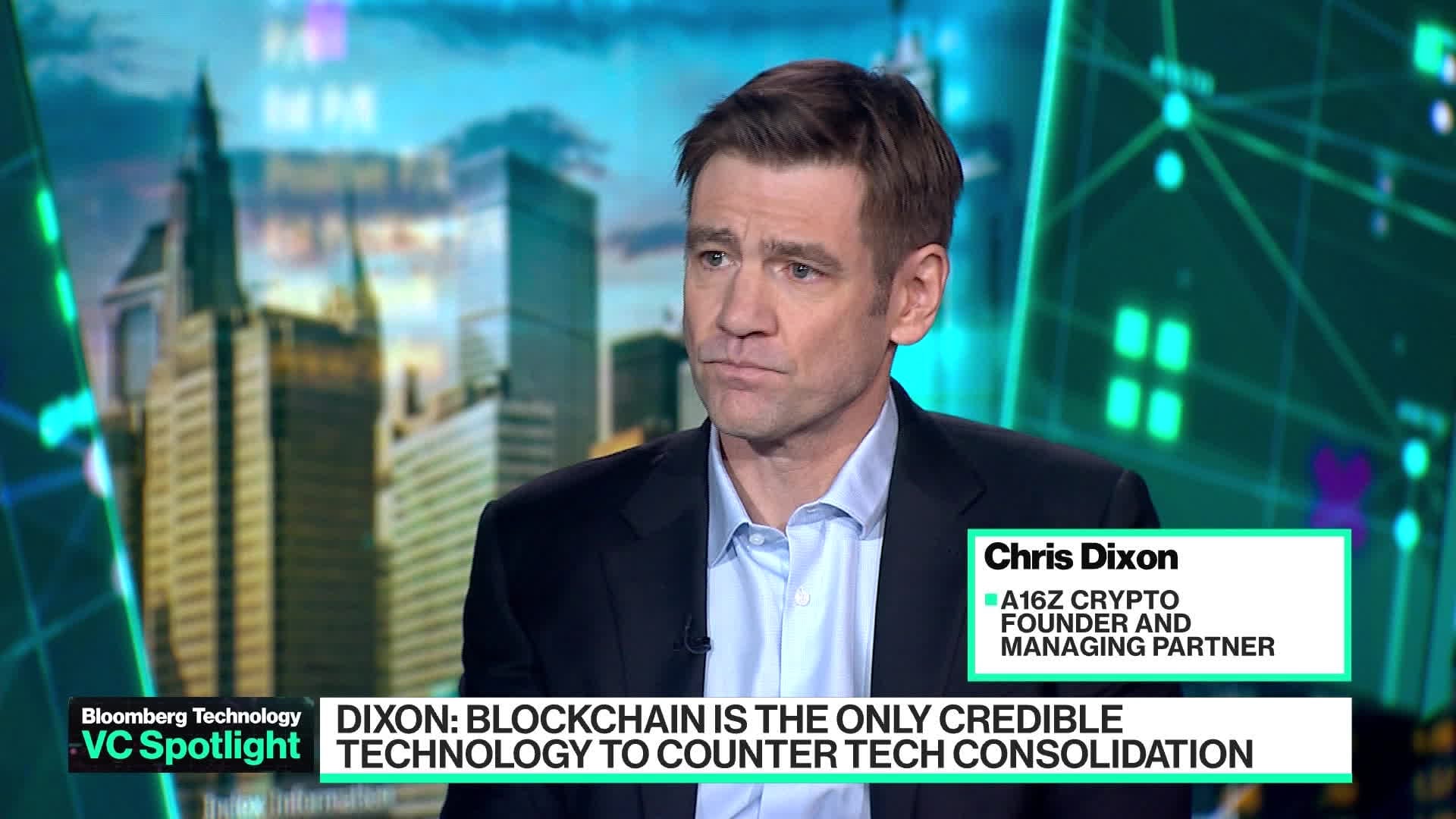
Here are the ideas founders keep coming back to:
🔹 Great ideas often look wrong early
If everyone agrees your idea is good, it’s probably already crowded. The best startups target mispriced opportunities—markets full of uncertainty, not consensus.
🔹 “Secrets” create unfair advantages
Breakout founders know something others don’t. That edge comes from deep domain expertise, unique life experience, or mastery of emerging tools—not surface-level trends.
🔹 Execution beats inspiration
VCs don’t fund slide decks. They fund teams that can build. A demo isn’t about proving the idea is possible—it’s proof the team can execute under pressure.
🔹 Markets are narratives, not spreadsheets
At the earliest stages, market size can’t be proven with math. Winning founders articulate a compelling story about where the world is going—and why they’re positioned to lead it.
🔹 Choose investors like long-term partners
Not all capital is equal. Builders add leverage through networks, judgment, and integrity. Extractors just take upside.
🔹 Rejection is a feature, not a bug
Ambitious goals guarantee rejection. The founders who win are the ones who build resilience early and keep going anyway.
Startups aren’t about avoiding risk—they’re about understanding it better than anyone else and leaning in with conviction.
🛑How We Learned to Kill Bad Deals Early
✂️Why Smart Founders Kill Bad Deals
Why Smart Founders Kill Bad Deals
Few moments feel better for a B2B founder than hearing: “We’re excited—can you build a prototype?” It sounds like traction. It feels like momentum. But as this story shows, it can just as easily be the start of an expensive dead end.
This case dives into a painful but common startup mistake: confusing enthusiasm with intent to buy. A founder pours weeks of scarce engineering time into building a custom prototype, integrates customer data, nails the demo—and then gets silence. No feedback. No deal. Just wasted time, money, and morale.

The core lesson is uncomfortable but critical: not every excited prospect is a real buyer.
In complex enterprise sales, there isn’t just one product–market fit. There are multiple:
- Users who love the product
- Champions who advocate internally
- Buyers who control budgets
- Gatekeepers who control approvals
Skipping any of these is how startups burn runway.
The turning point in this story comes when the founder learns to be ruthless about opportunity cost. Instead of building first and hoping later, he introduces structure and “polite forcing functions.” He asks direct questions about budget, authority, timelines, and success criteria. Then he does something most founders are afraid to try: he sends a fully cancelable purchase order.
The result? Tire-kickers disappear. Serious prospects lean in. And demo-to-close conversion rates skyrocket.
If you don’t know the path to a purchase order, don’t build the prototype. Ruthlessness isn’t arrogance—it’s survival.
Before your next “excited” prospect pulls your team into weeks of work, read this closely—and redesign your sales process to qualify buyers before you build.
Here are 450+ pitch decks showing how the biggest startups actually raised funding.
Not theory.
Not templates.
Real decks from companies that went on to raise millions—and billions.
You’ll see:
- How top startups structured their story
- What they highlighted (and what they left out)
- How they explained traction, markets, and vision
- Why investors said yes
👉 Browse 450+ real pitch decks and learn how big startups got funded.
✨ ICYMI — These Resources Blew Up This Week
Founders were scrambling for these drops—each one unlocked deal flow, investor access, or tactical fundraising shortcuts. If you missed them the first time, this is your chance to catch up before everyone else does.
Don’t wait. These are the kind of links founders bookmark—and competitors quietly use.
🔥 The Most Clicked Founder Resources
🔹 1000+ Angel Investors You Can Reach Today — One massive list to shortcut months of outreach.
🔹 Steal 100 Pitch Decks That Actually Closed — See exactly what winning decks look like.
🔹 101 Fintech VCs Most Founders Overlook — A free list built for fintech startups ready to raise.
🔹 300 Angels Backing Startups Right Now — A curated database for serious founders.
🔹 500 Ultra-Active Angels in One Place — Meet the angels writing checks this year.
🔹 Top 100 Angels You Should Pitch First — Your shortcut to high-signal early backers.
🔹 The 200 Angels Funding Fast-Growing Startups — A must-have list for early outreach.
🔹 The Pre-Seed Playbook Every Founder Needs — A practical guide to nailing your first raise.
🔹 2,500+ Verified Angels in AI & SaaS — Backers actively funding technical founders.
🔹 Fundraising Mistakes From a $13M Raise — Avoid the painful errors most founders repeat.
Don’t just save these—use them. The founders who act fastest raise fastest. Want these in a searchable Notion library?
🔥 How Smart Founders Create Investor FOMO
🧠 What VCs Actually Look For in 2026 (No One Says This)
Raising capital in 2026 won’t fail because your idea isn’t good—it’ll fail because you’re unprepared. Most founders walk into fundraising with scattered advice, weak signals, and no repeatable process. The result? Months of wasted time, missed intros, and polite “we’ll pass” emails.
This cheat sheet flips the script.
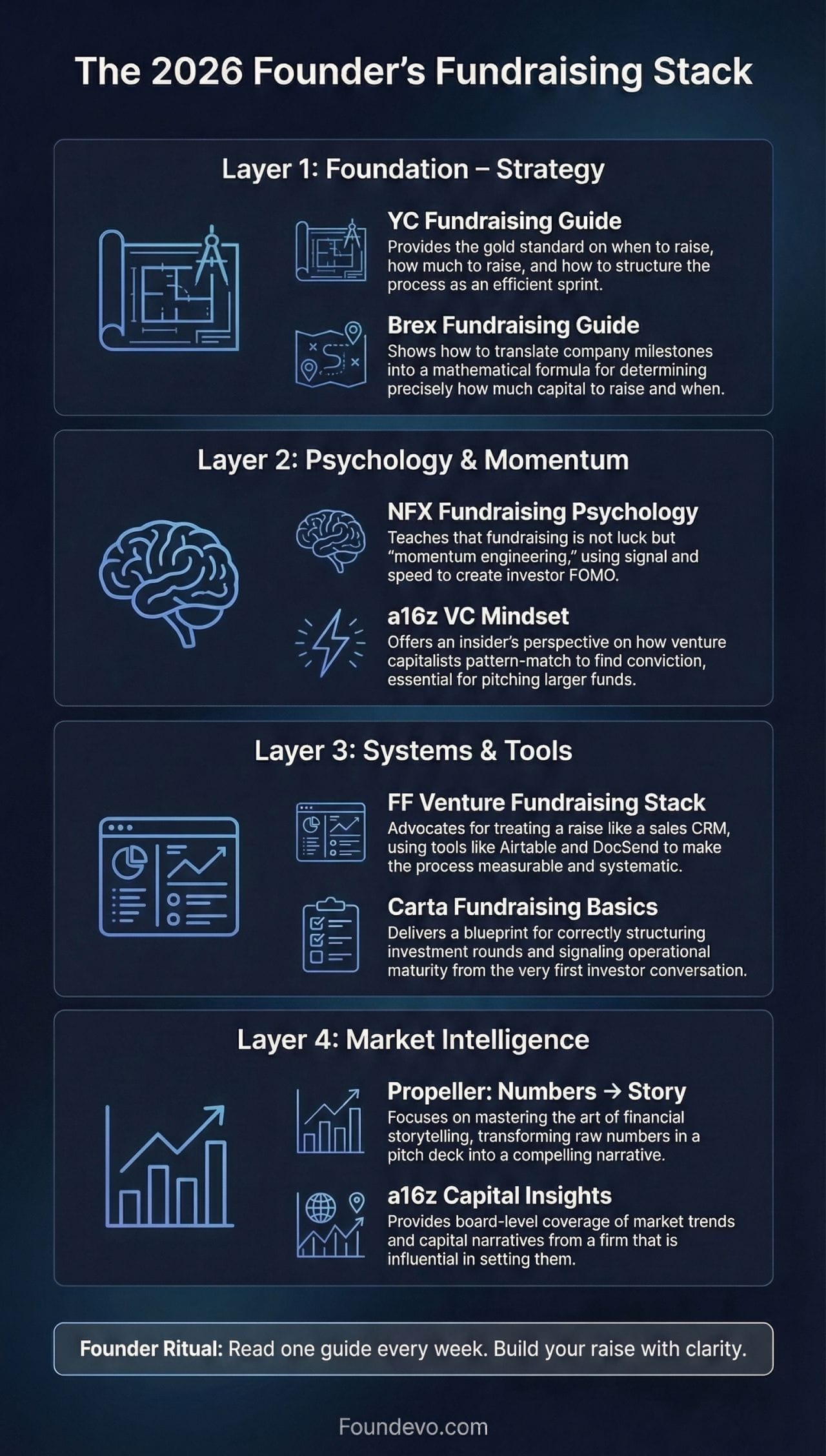
The smartest founders don’t rely on luck—they rely on systems. The resources highlighted here come straight from the firms that shape venture capital: Y Combinator, Andreessen Horowitz, NFX, Carta, Brex, and more. Together, they reveal one clear truth: fundraising is not an art—it’s an engineered process.
Here’s what these guides collectively teach:
- Timing matters more than hype. YC and Brex emphasize raising only when momentum is undeniable—and raising just enough to hit the next fundable milestone.
- Momentum creates FOMO. NFX breaks down how speed, signaling, and sequencing turn “maybe later” into competitive investor interest.
- VCs pattern-match, not guess. a16z shows how investors evaluate founders, markets, and conviction behind closed doors.
- Fundraising is ops-heavy. FF Venture and Carta push founders to treat fundraising like sales—tracked, measured, and optimized with the right tools.
- Your deck tells a financial story. Propeller reminds founders that slides alone don’t raise money—clarity and numbers do.
In 2026, the winners won’t be the loudest founders—they’ll be the most prepared ones. Fundraising clarity compounds just like product velocity.
💰 The Most Valuable AI Startups in 2025
🚀 Most Valuable AI Startups in 2025
2025 isn’t just another good year for startups—it’s a structural break in tech history. AI companies didn’t grow gradually. They compressed decades of value creation into months, rewriting what “big” means in venture capital.
The numbers alone feel unreal.
The top 25 AI startups raised $95B+, reaching a combined valuation of $1.2T+—larger than the GDP of most countries. And this momentum isn’t slowing.
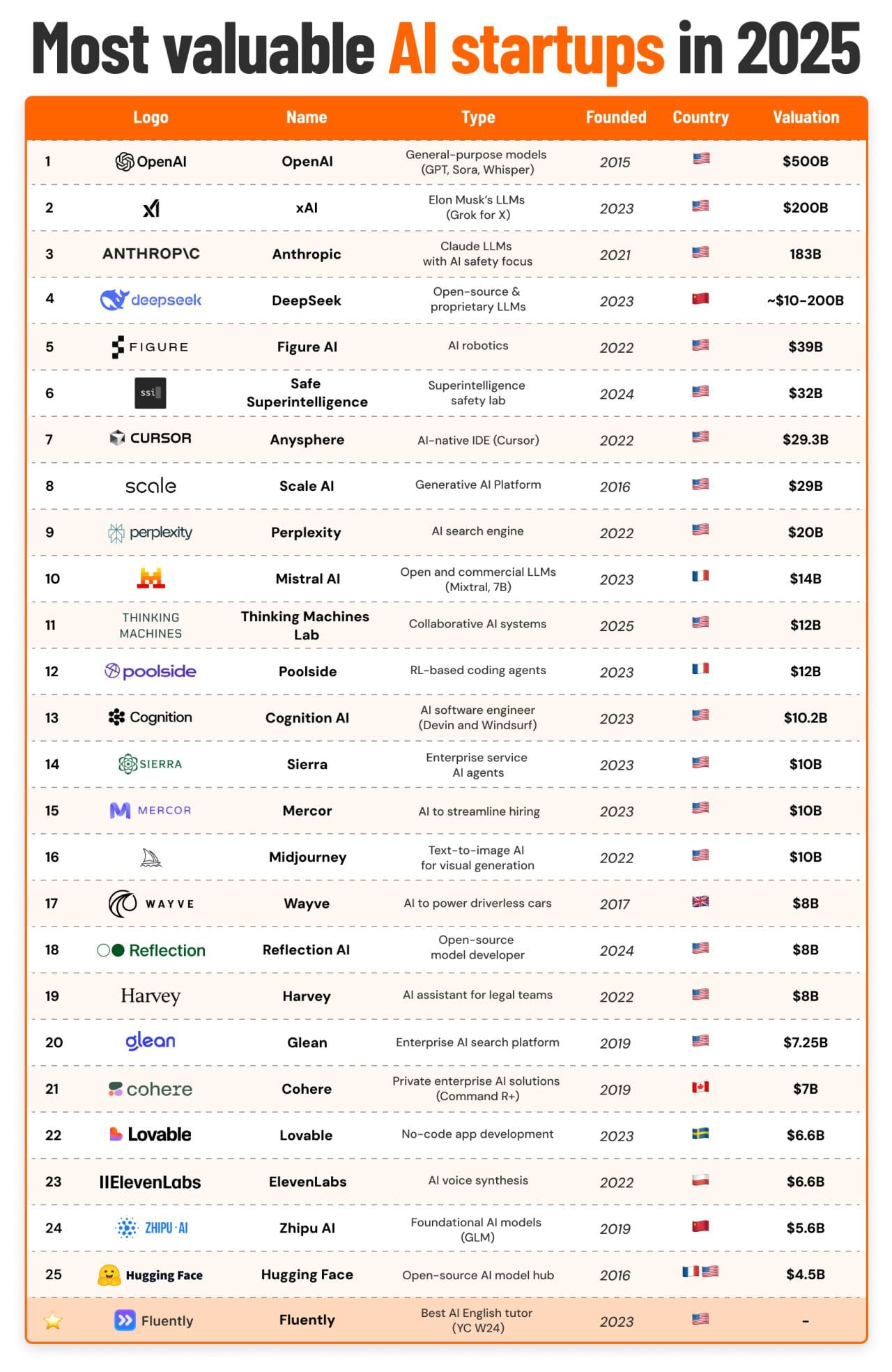
What stood out in the 2025 AI boom:
- Category leaders became empires.
OpenAI (5.5x), Anthropic (10x), xAI (8x), and Perplexity (7x) showed that foundational AI winners can scale faster than any SaaS generation before them. - Speed became the new moat.
Cursor’s 12x jump and Thinking Machines Lab’s $12B valuation in five months proved that execution velocity now rivals product defensibility. - AI crossed into the physical world.
Figure’s 15x rise signaled a shift from software-only intelligence to embodied AI—robots working in real factories. - Revenue scaled as fast as valuation.
Lovable and Mercor demonstrated that AI-native companies can reach hundreds of millions in ARR almost immediately when demand is real. - Capital flooded in—without hesitation.
Over $200B invested into AI in a single year, including massive checks for companies with minimal or no public products.
AI has reset the startup curve. $10B valuations are no longer once-in-a-decade events—they’re becoming the entry ticket for category-defining companies. The gap between winners and everyone else is widening fast.
👉 See who’s dominating AI in 2025 →
🔥WEB PICKS
🧠 TSMC Accelerates Overseas Chip Production
TSMC is fast-tracking advanced chipmaking outside Taiwan to hedge against geopolitical risk and reduce global supply chain exposure.
♻️ AI Turns Textile Waste into New Fabric
Everbloom is using AI to fine-tune machines and chemistry, transforming discarded fibers into high-quality reusable textiles at scale.
⚖️ OpenAI’s Platform Gamble: Scale vs. Sustainability
OpenAI’s strategy hinges on winning distribution now—despite multi-year losses, massive infrastructure spend, and profitability unlikely before 2029.