🚀What’s Coming in 2026 for Tech Builders
🔍 Can Your AI Impress Paul Graham?

In This Edition:
- 🌐 2026 for Tech Builders
- 💥 How Jeff Bezos Turns Startup Stress Into Growth
- ⚙️ How Startups Profit From AI
- 🔍 Can Your AI Impress Paul Graham?
- ✨ ICYMI — The Founder Resources
🚀 2026 for Tech Builders
🚀What’s Coming in 2026 for Tech Builders
The tech landscape isn’t evolving—it’s reorganizing itself.
Across infrastructure, creativity, cybersecurity, and education, a new pattern is emerging: systems built for AI, workflows powered by AI, and industries reshaped around AI.
🔍 What’s Changing Fast
• Data chaos becomes the new battleground
Enterprises realize models aren’t the problem—messy multimodal data is.
• Agent-native infrastructure rises
Workloads move from human-paced clicks to machine-speed coordination.
• Creativity goes multimodal
Images, voice, video, and environments fuse into seamless storytelling tools.
• Systems of record lose dominance
Execution shifts to intelligent layers that act across platforms.
• Personalization becomes the default
Healthcare, education, and media pivot from “for everyone” to “for each one.”
💡 The Big Takeaway
2026 rewards builders who design for agents, not humans—and who see coordination, not capability, as the true moat.
📣 Ready to explore what this future unlocks? 👉 Dive into the complete analysis to see which shifts matter most for your roadmap—and where the biggest 2026 opportunities are emerging.
Get Scott Redler’s free options strategy guide
After 30 years of trading, Scott Redler is revealing how he spots high-probability options plays—before they take off. Today, he’s breaking his options strategy down in a free report & video, showing exactly how he finds and trades these setups—including how to avoid emotional trading mistakes that cost traders money.
Get the FREE report & video here. Download Now.
🚀 How Jeff Bezos Turns Startup Stress Into Growth
🚀 How Bezos Turns Pressure Into Momentum
Startup pressure isn’t just a byproduct of building—it’s a diagnostic tool. Bezos’ approach reframes stress as a signal of misalignment, enabling founders to convert anxiety into strategic movement. It’s a mindset shift that separates reactive teams from resilient, fast-learning companies.
🔍 What This Framework Unlocks
• Clarify the controllables
Stress often points to unclear ownership. Tightening focus restores momentum.
• Move first, refine later
Small, fast decisions break stagnation and accelerate iteration cycles.
• Stretch the time horizon
Evaluating choices through a long-term lens reduces noise and improves judgment.
• Treat pressure as discovery
Curiosity turns tension into insight, revealing opportunities competitors overlook.
Teams that treat stress as information—not threat—build stronger instincts, better products, and more durable growth paths.
⚡How Startups Profit From AI
🚀 Turning AI Hype Into Real Revenue
AI is everywhere—but real revenue isn’t. While countless startups experiment with demos and prototypes, only a small group is converting AI into sustainable income. Their advantage isn’t access to better models—it’s the ability to turn intelligence into customer value.
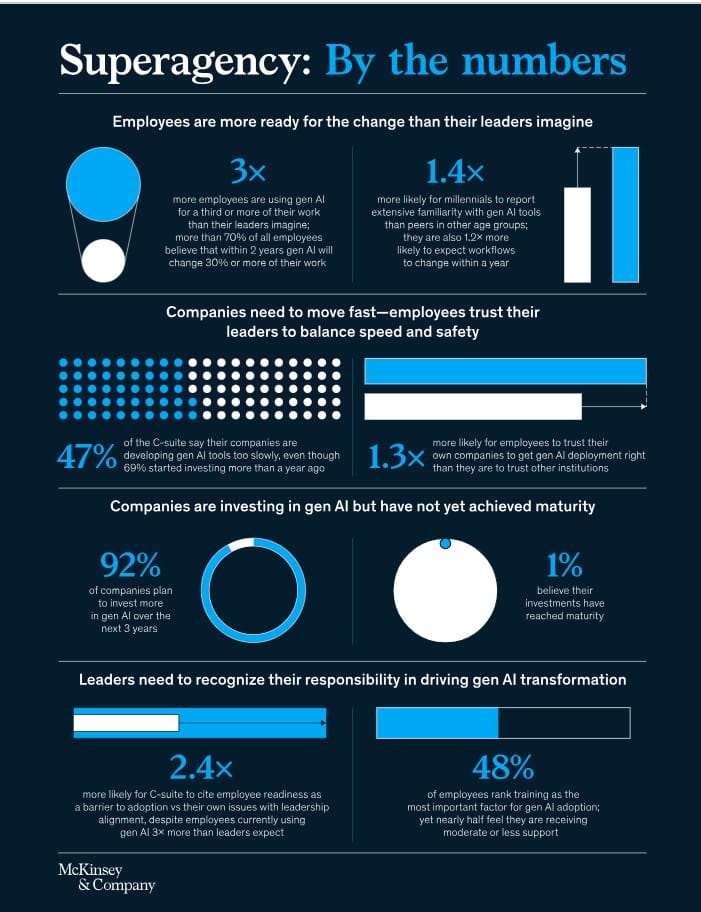
• AI becomes the product, not the feature
Intelligent workflows drive willingness to pay and market differentiation.
• Systems self-improve
Founders implement AI internally to cut onboarding time, reduce churn, and accelerate iteration cycles.
• Monetization beats experimentation
From AI-enhanced SaaS to no-code automation and digital IP, founders are generating revenue with precision—not hype.
💡 Core Takeaway
The next wave of breakout startups will treat AI as core infrastructure, building leverage, efficiency, and revenue into their foundations from day one.
🔥 Can Your AI Impress Paul Graham?
🚨 Would Paul Graham See ROI or Just a Demo?
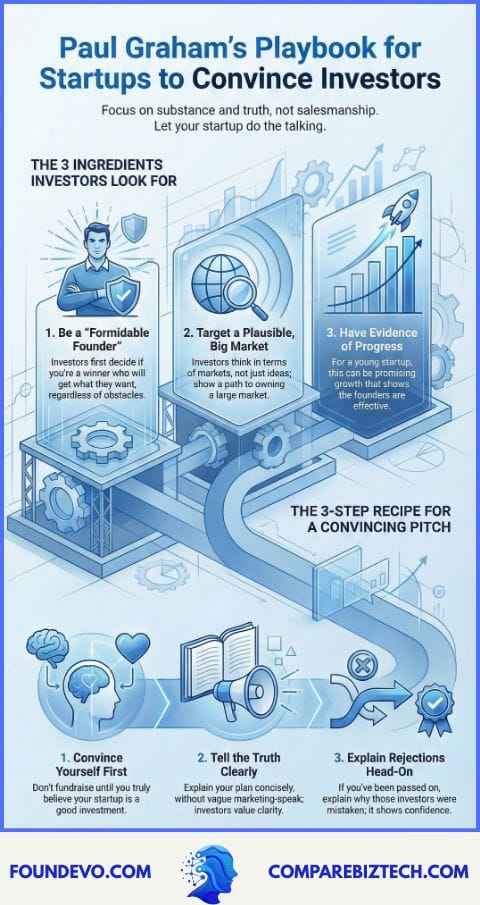
Most AI products impress in demos—but collapse in real conditions. This is the gap Paul Graham’s philosophy exposes: standout startups deliver value so obvious that neither investors nor customers need persuasion. The real test isn’t model sophistication; it’s whether the product solves a painful problem reliably, repeatedly, and under imperfect inputs.
• Value is undeniable
ROI must be visible in time saved, cost reduced, or revenue gained.
• The product survives chaos
Messy data, misuse, and non-technical users shouldn’t break the system.
• Impact > activity
Customer outcomes matter more than feature depth or demo polish.
💡 Core Takeaway
AI founders win by proving their product works outside the controlled environment—where the real world is unpredictable, unforgiving, and the only place ROI actually matters.
🔥 ICYMI — The Founder Resources Everyone Grabbed First
Founders are scrambling for these resources—each one unlocking faster deal flow, investor access, and fundraising leverage. These aren’t links to save for later.
They’re the playbooks competitors quietly use to get ahead while others are still preparing.
🔥 The Most Clicked Founder Resources
🔹 1000+ Angel Investors You Can Reach Today — One massive list to shortcut months of outreach.
🔹 Steal 100 Pitch Decks That Actually Closed — See exactly what winning decks look like.
🔹 101 Fintech VCs Most Founders Overlook — A free list built for fintech startups ready to raise.
🔹 300 Angels Backing Startups Right Now — A curated database for serious founders.
🔹 500 Ultra-Active Angels in One Place — Meet the angels writing checks this year.
🔹 Top 100 Angels You Should Pitch First — Your shortcut to high-signal early backers.
🔹 The 200 Angels Funding Fast-Growing Startups — A must-have list for early outreach.
🔹 The Pre-Seed Playbook Every Founder Needs — A practical guide to nailing your first raise.
🔹 2,500+ Verified Angels in AI & SaaS — Backers actively funding technical founders.
🔹 Fundraising Mistakes From a $13M Raise — Avoid the painful errors most founders repeat.
🔹 490 Real Pitch Decks That Raised Millions — Actual decks, actual funding, zero fluff.
🔹 Harvard’s Complete Startup Idea-to-Impact Guide — A must-read for builders refining their vision.
🔹 The Ultimate Fundraising Resource Stack — Everything you need to raise smarter, not harder.
⚡ Pro Tip: The founders who move fastest raise fastest.
Want these organized into a searchable Notion library?
🎯 Startups Buzz
Why 99% of Founders Should NOT Raise Venture Capital
A growing number of YC veterans are saying the quiet part out loud: 99% of founders shouldn’t raise VC at all. Venture capital only works if your startup can realistically return 100x–1,000x, and most businesses don’t need that kind of jet fuel—they need freedom, profitability, and control.
The real winners?
Founders who build businesses that fund their lifestyle, not their stress. If you can reach profitability without front-loading millions—don’t raise. Keep the equity. Keep the freedom.
VC isn’t a badge of honor—it’s a tool, and only essential when your startup cannot exist without upfront capital.
🎯 Is Your Startup Funnel Actually a Trap?
Many founders don’t realize their funnel isn’t broken—it’s misaligned. The real trap happens when startups pour energy into traffic, automation, or fancy tools while ignoring the fundamentals: differentiation, conversion, retention, and real buyer behavior. A funnel becomes a liability when it drives complexity instead of clarity.
The winners fix bottom-of-funnel issues first, track meaningful actions (not vanity metrics), simplify early systems, and focus on retention as much as acquisition.
The truth: Funnels don’t fail—founders do when they follow the wrong metrics.
🔥WEB PICKS
🤖 Claude Code Invades Slack—Developers Are Losing It
Anthropic just turned Slack into a full coding environment, letting Claude read threads, pick repos, and ship PRs—all from chat.
🚨 Slack’s CEO Quits for OpenAI — The Power Shift Begins
Denise Dresser is leaving Slack to supercharge OpenAI’s enterprise revenue engine, signaling a major shift in AI leadership and strategy.
⚠️ Google Hit With EU Probe Over AI Theft Claims
Regulators are investigating whether AI Overviews and AI Mode illegally scrape publisher and YouTuber content, blocking rivals in the AI search race.
🔥 ChatGPT Nears 900M Users — But Gemini Is Catching Up Fast
The Information reports explosive growth—and the AI user race is suddenly much tighter than anyone expected.
💼 Anthropic Taps Accenture’s 30,000 Consultants to Push Claude Into Enterprises
A massive three-year partnership aims to turn risk-averse corporations into heavy AI adopters using Claude-powered workflows.
😬 OpenAI Economist Quits Over Concerns About ‘Pro-AI Spin’
Wired reveals internal tensions over whether the company is downplaying AI-driven job loss in its economic research.
📦 Amazon Supercharges Alexa+ Into a Shopping Command Center
Echo devices now track deliveries, add last-minute items, and recommend gifts—turning Alexa into a retail power tool.
👓 Google’s AI Glasses Are Coming—And Meta Should Be Worried
Launching in 2026, Google’s Project Astra-based eyewear brings multimodal AI into everyday life, directly challenging Ray-Ban Meta smart glasses.