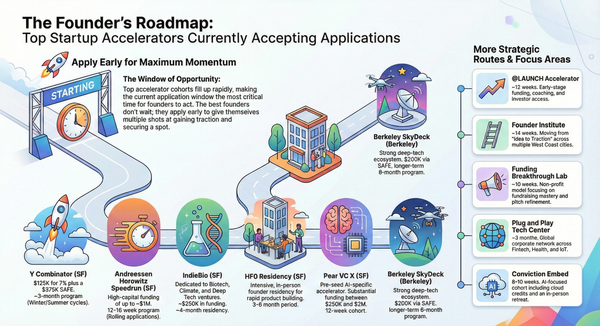
What Every Founder Can Learn from MIT’s Startup Formula

MIT Startup Guide

In This Edition:
- ⚙️ Turn AI Into Your Income Engine
- MIT Startup Guide
- How Investors Really Value Your Startup
- Most Valuable VC Voices
- GitHub’s Growth Story Is Unreal
- ️ Startup “Heresy Map”
Turn AI into Your Income Engine

Ready to transform artificial intelligence from a buzzword into your personal revenue generator? Our groundbreaking guide "200+ AI-Powered Income Ideas" is your gateway to financial innovation in the digital age.
Inside you'll discover:
- A curated collection of 200+ profitable opportunities spanning content creation, e-commerce, gaming, and emerging digital markets—each vetted for real-world potential
- Step-by-step implementation guides designed for beginners, making AI accessible regardless of your technical background
- Cutting-edge strategies aligned with current market trends, ensuring your ventures stay ahead of the curve
Download your guide today and unlock a future where artificial intelligence powers your success. Your next income stream is waiting.
Get Your Guide
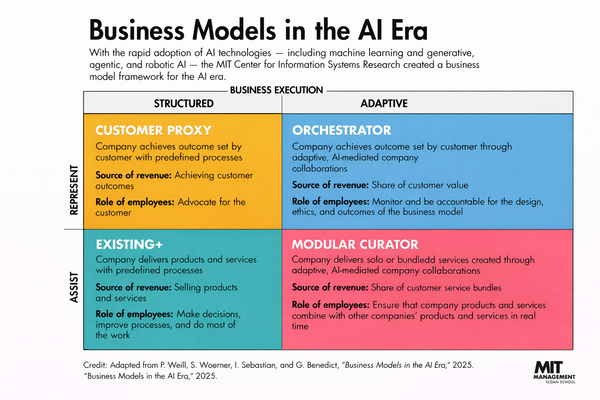
⚡ The MIT Startup Blueprint: How Ideas Become World-Changing Companies
Ever wondered how startups like Akamai, E Ink, or Alnylam went from lab discoveries to billion-dollar breakthroughs?
MIT’s entrepreneurial ecosystem has quietly become a launchpad for innovation, nurturing 20+ new startups every year — all born from the minds of researchers, students, and faculty turning inventions into impact.
From the Technology Licensing Office (TLO) that safeguards intellectual property to the Deshpande Center that fuels prototypes with seed funding, MIT has built a complete startup playbook — a living guide that walks founders from “idea on paper” to “investor-ready venture.”
Inside the guide, you’ll learn:
- How to navigate startup licensing, patents, and NDAs
- Where to find funding pathways (from angel investors to competitions like the $100K Challenge)
- The essentials of conflict-of-interest policies every faculty founder should know
- Plus, how MIT’s Venture Mentoring Service and Entrepreneurship Center connect you with the right people to make your vision real
It’s not just a handbook — it’s a startup survival map designed by one of the world’s most successful innovation engines.
✨ Whether you’re an early-stage founder, a researcher eyeing commercialization, or an ecosystem builder — this is a must-read.
Download the full MIT Startup Guide and discover how the world’s top innovators turn research into reality:
MIT Startup Guide
2.84 MB • PDF File
Download
Your next big idea might already be waiting for its MIT-style launch.
How Much Is Your Startup Really Worth?
Every founder hits this question sooner or later — “What’s my startup actually valued at?”
EY’s latest guide breaks it down into six simple steps using the Discounted Cash Flow (DCF) method — a tool that values your startup not by what it’s worth today, but by what it could achieve tomorrow.
Here’s the big idea
✅ DCF focuses on future performance, not just current assets.
✅ It helps early-stage founders translate potential growth into numbers.
✅ You’ll learn how to calculate free cash flow, discount factors, and even terminal value — without needing a finance degree.
✅ Plus, EY explains how to build realistic scenarios (best, base, and worst case) so you can walk into investor meetings prepared and confident.
But here’s the twist —
Your startup’s valuation isn’t a single magic number. It’s a story of your assumptions, risks, and future ambition.
The DCF method doesn’t just give you figures — it helps you understand your startup’s true financial narrative.
Curious to know how investors see your company’s worth?
Download the full eBook — “Startup Valuation: Applying the DCF Method in Six Steps” — and master the framework top founders use before every pitch.
How Investors Really Value Your Startup
12.58 MB • PDF File
Download
MarketBeat releases Top 10 Stocks to own report
While the crowd’s chasing yesterday’s headlines, the real money’s brewing in the shadows.
2025’s megatrends - AI’s takeover, consumer empires doubling down, aerial taxis rewriting travel - are already here.
And Wall Street’s too busy navel-gazing to notice.
Our 10 Stocks Set to Soar in 2025 report cracks the code on those megatrends, giving you the name and ticker of the companies at the forefront of each one.
MarketBeat’s analysts sifted the chaff to deliver these 10 picks…
And they could very well be your ticket to profits the masses will miss.
Free today, after that, it’s strictly for paid members.
Act now or watch from the sidelines later!
Get your report here!
The VCs Who Don’t Just Invest — They Teach You How to Win
2025 is the year of transparent investing.
The smartest VCs aren’t hiding behind closed doors anymore — they’re on LinkedIn, sharing what most founders used to pay to learn:
how deals get done,
what investors actually look for,
and how “smart money” is thinking in real time.
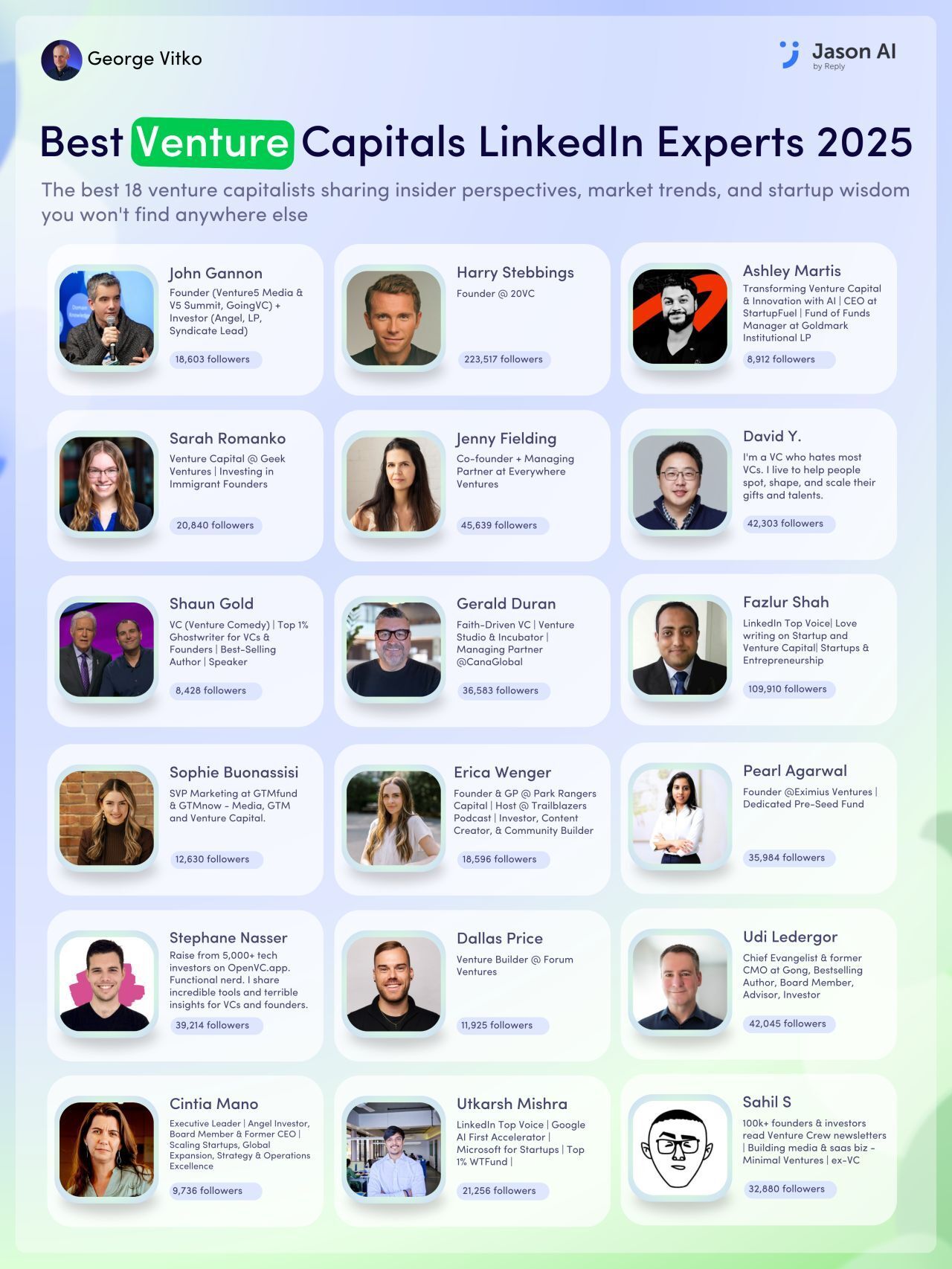
If you’re building, fundraising, or just decoding the startup capital game, these voices are your daily masterclass.
They don’t gatekeep. They share real numbers, tough lessons, and insider playbooks — for free.
From Harry Stebbings and Jenny Fielding to John Gannon and Pearl Agarwal, these are the investors shaping what startup funding really looks like in 2025.
Whether you’re pitching or learning — this is your shortcut to venture wisdom.
Meet the VCs redefining transparency and influence in 2025
➡️ Read the full list and follow the ones changing the game.
️How AI Is Quietly Rebuilding the Coding World
This year’s Octoverse 2025 report reveals some seismic shifts in software development: over 36 million new developers joined GitHub — that’s roughly one new dev every second.
What’s driving this growth? AI and typed languages. For the first time, TypeScript overtook both Python and JavaScript in popularity — signaling a major shift in how code is being written and maintained.
And the global map of developers is changing too — emerging regions are powering growth at unmatched speed.
If you’re building, hiring, or navigating the world of software — this is a must-read.
Ready to ride the next wave? Check out the full Octoverse report and see where you stand.
Startups Buzz
The Startup “Heresy Map” Every Founder Should Make
Every breakthrough company starts with an unpopular idea.
Think Airbnb (“strangers in your home?”), Tesla (“EVs can’t scale”), or Stripe (“payments are solved”).
Paul Graham calls these the heresies — ideas everyone dismisses as “crazy,” but that turn into billion-dollar companies.
This guide helps you spot those “forbidden zones” in your own market — the overlooked truths and contrarian bets that the crowd can’t see yet.
Learn how to map startup heresies — and find your billion-dollar insight before everyone else.
The Startup Toolkit Top Founders Don’t Want You to Miss
What do YC founders, top VCs, and repeat entrepreneurs actually use to build, launch, and scale?
Not generic advice — but battle-tested tools: pitch templates, growth frameworks, investor trackers, hiring playbooks, and strategy decks that save months of trial and error.
This isn’t another “resource list.” It’s a curated founder toolkit built from real startup trenches — the same ones used by operators who’ve taken ideas from zero to $100M+.
Explore the full toolkit and steal the systems used by today’s best founders.
The Top 50 Angel Investors Behind Today’s Unicorns
Before the VCs showed up, these 50 angels saw the magic first.
They wrote early checks to startups like Airbnb, Figma, Stripe, and Notion — long before the world believed.
From PayPal mafia veterans to YC insiders and product-led founders turned investors, this list reveals the people quietly shaping the next decade of innovation.
Discover who they are, what they invest in, and how to get on their radar.
10 Lessons from Building a $32M Remote Team
What does it really take to scale a 68-person remote company to $32M+ in annual revenue — without an office, meetings chaos, or burnout?
These 10 lessons break down the unsexy systems that make remote work actually work: hiring top talent globally, setting clear accountability loops, automating workflows, and building culture across time zones.
It’s not theory — it’s a blueprint drawn from the field.
Read all 10 lessons and build a high-performance remote team that scales — anywhere.
WEB PICKS
Anthropic’s Claude Just Went Full Wall Street Mode
Claude for Financial Services now builds DCF models, runs Excel sheets, and connects to real-time market data. Anthropic’s coming for OpenAI’s enterprise crown.
♀️ Fitbit’s New AI Coach Knows You Better Than You Do
From sleep insights to adaptive workouts, Fitbit’s premium users just got a personalized wellness trainer that actually listens — literally.
️ Pinterest Just Became Your Personal AI Stylist
AI-powered board upgrades now mix personalized shopping tabs with outfit collages — turning your pins into instant looks you can buy.
This New AI Training Method Could Redefine Efficiency
Thinking Machines’ “on-policy distillation” delivers frontier-level reasoning at up to 100x less compute — the smartest AI shortcut yet.