How Startups Actually Get Funded

How Startups Actually Get Funded


In This Edition:
- How Startups Actually Get Funded
- 11 Ways Startups Actually Make Money
- ⚡Perplexity’s $20B Playbook for Smarter Work
- Why Smart Founders Start “Stupid”
Turn customer feedback into evidence that moves your product roadmap faster
Enterpret unifies tickets, reviews, and surveys in one place; auto-tags themes using AI. Helping PMs size impact by revenue; quantify affected users and why; package insights with verbatim quotes stakeholders remember; and track sentiment after launches.
Used by Canva and Notion to align stakeholders and ship higher-impact work, faster.
Book a demo, today!
How Startup Funding Rounds Really Work
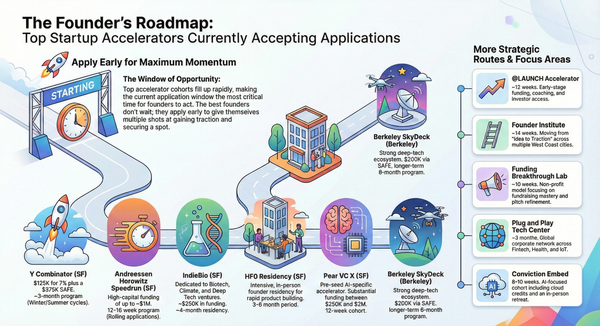
Every great startup story starts with an idea — but it’s funding rounds that turn ideas into companies. Understanding how each round works helps founders navigate investor expectations, dilution risks, and growth milestones that define long-term success.
Highlights:
- Pre-Seed & Seed: Sell the vision, not the numbers.
- Series A–C: Scale fast, prove revenue, expand markets.
- Every round: More scrutiny, less equity, higher pressure.
Raising capital isn’t just about getting funded — it’s about earning investor trust at every stage.
Explore the full breakdown of how startup funding rounds work and what it takes to progress from seed to scale. ️
How Funding Rounds Work For Startups
11 Ways Startups Actually Make Money
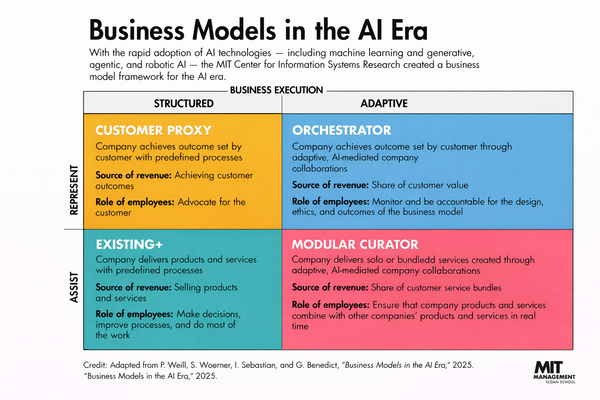
Building a product people love is only half the journey — building one they’ll pay for is where startups truly win. As markets tighten and investors prioritize revenue over growth, choosing the right monetization model has never been more critical.
Key Insights:
Subscription: Predictable recurring revenue and long-term retention.
Transaction: Charge per use, sale, or interaction.
Ads & Affiliates: Monetize attention and partnerships, not just usage.
Licensing & White-Label: Scale your tech by letting others sell it.
Hybrid Models: Combine revenue streams for resilience and growth.
A great product attracts users. A great business model sustains innovation.
You’re invited to the world’s largest email marketing conference.

Become an email marketing guru at the GURU conference. It’s two days full of all things email marketing. Learn more about newsletters, deliverability, design trends, AI, and what NOT to do with email.
What you can expect:
- Keynote Speakers: Nicole Kidman, Amy Porterfield & more!
- The latest digital trends in email marketing & how to increase performance.
- Networking opportunities - each day!
- Dj’s, dance contests (judged by Lance Bass, yes for real), breaking world records & MORE!
Spots are limited. It’s VIRTUAL. It’s FREE. It’s time to become an email marketing GURU. Join 25,000+ marketers on November 6th & 7th. Don’t miss out!
YES! I want to register!
Inside Perplexity’s $20B “AI at Work” Strategy
Perplexity, now valued at $20 billion, just released its AI at Work playbook — a tactical guide for professionals using AI to amplify performance, not just productivity. The message is clear: the future of work belongs to those who combine human intent with AI execution.
Key Insights:
Focus before output: Protect attention — no AI can fix distraction.
Treat AI as a collaborator: Delegate repetition, keep judgment human.
Think in workflows, not tasks: Connect research → synthesis → output.
Build systems that learn: Each loop with AI compounds clarity and speed.
Shift from output to impact: Measure leverage, not effort.
AI isn’t replacing work — it’s redefining how high-leverage work gets done.
Explore Perplexity’s fullAI at Work playbook to learn how to design smarter workflows that scale your thinking, not just your to-do list.
Perplexity dropped its ‘AI at Work’ playbook
Stop post-purchase fraud before it drains your eCommerce business.

Running an eCommerce brand is hard enough, fraud shouldn't make it harder.
Post-purchase fraud, or "digital shoplifting," slips past checkout tools and costs DTC brands millions in disputes, wasted shipping, and lost revenue.
Chargeflow Prevent is the first AI-powered solution that stops fraud after payment but before fulfillment, cutting disputes by up to 90% with less than 0,1% false positives.
Stop Fraud in Its Tracks

The MVP Rule Every Founder Breaks
Perfection doesn’t build startups — momentum does. As Michael Seibel explains, the smartest founders don’t wait for flawless products; they launch fast, gather feedback, and evolve quickly. The best MVPs look “stupid” at first — but they work.
Key Insights:
Your first users want solutions, not polish. They’ll forgive design flaws if you solve a real pain point.
The “perfect MVP” myth kills speed. Endless research without shipping equals zero learning.
Great startups began incomplete. Airbnb launched without payments, Stripe without full APIs, and Twitch with one streamer
Iterate in loops. Build → Test → Learn → Repeat. The faster you cycle, the sooner you find traction.
Early imperfection is a feature, not a flaw.
Explore the full breakdown to see why the smartest founders launch early — and learn faster than everyone else. ️
Startups Buzz
The Anti-Unicorn Playbook: Why Bootstrapping to $10 M ARR Wins
While unicorns chase billion-dollar valuations, bootstrapped founders quietly win through control, profitability, and sustainability. Building a $10M ARR business without VC money is becoming the smarter—and freer—path to success.
Discover why founders are ditching unicorn dreams for independence
The PLG Illusion: Why Software Firms Must Add a Sales Engine
Product-led growth looks effortless—until it stalls. HBR warns that relying solely on PLG can cap growth without a solid sales strategy to back it up. The best companies merge product adoption with human connection.
Learn how hybrid GTM strategies are saving PLG startups
Beyond CAC: The True Cost of Customer Acquisition in an AI-Saturated Market
In a world flooded with AI-powered marketing, acquisition costs are climbing. HubSpot’s data shows the real winners are those optimizing lifetime value, not chasing clicks.
See what’s driving up CAC—and how smart founders are adapting
The New IP Risk: Protecting Data When Building with Third-Party AI Models
AI innovation comes with a hidden cost: your data. Stanford researchers highlight the rising IP and privacy risks of building on third-party models without strong governance.
Explore how startups can safeguard their data and reputation
Surviving a Valuation Correction: How to Frame, Negotiate, and Exit Smart
Falling valuations are testing even seasoned founders. The key? Strong storytelling, precise metrics, and confident negotiation. Positioning your startup correctly can make the difference between dilution and dominance.
Find out how top founders navigate valuation resets
Your Seed-to-Series A Metrics Playbook: The Slide VCs Actually Value
VCs aren’t just funding potential—they’re funding proof. OpenVC reveals the one metrics slide that consistently wins investor confidence by showing growth, retention, and efficiency in one glance.
See what your pitch deck might be missing
WEB PICKS
Intel’s Big Comeback: Can Its Foundry Save the Future?
After years of lagging behind, Intel’s turnaround may hinge on its foundry business — the company’s boldest bet yet to reclaim chip dominance.
OpenAI Just Bought a Mac App — and It Changes Everything
By acquiring Sky, an AI interface for Mac, OpenAI is quietly moving into Apple’s backyard — redefining how humans interact with desktop AI.
These 20-Year-Old Dropouts Built an AI Empire
Meet the founders of Turbo AI — an AI notetaker that skyrocketed to 5 million users without a degree or a dollar of venture funding.
Instagram Just Got Smarter: Meet Meta’s AI Editing Tools
Meta is bringing AI right inside IG Stories — letting users remix, edit, and enhance posts in seconds, no Photoshop skills required.
Microsoft’s “New” AI Browser Looks a Lot Like OpenAI’s Atlas
Just two days after OpenAI’s big reveal, Microsoft dropped a strikingly similar AI browser — and the timing has everyone talking.
Meet Copilot Mode in Edge | Your AI Browser
Microsoft Revives Clippy — But This Time, It’s AI
Mico, Microsoft’s new interactive assistant, feels like Clippy’s smarter cousin — a nostalgic nod wrapped in next-gen AI power.
MarketBeat releases Top 10 Stocks to own report
While the crowd’s chasing yesterday’s headlines, the real money’s brewing in the shadows.
2025’s megatrends - AI’s takeover, consumer empires doubling down, aerial taxis rewriting travel - are already here.
And Wall Street’s too busy navel-gazing to notice.
Our 10 Stocks Set to Soar in 2025 report cracks the code on those megatrends, giving you the name and ticker of the companies at the forefront of each one.
MarketBeat’s analysts sifted the chaff to deliver these 10 picks…
And they could very well be your ticket to profits the masses will miss.
Free today, after that, it’s strictly for paid members.
Act now or watch from the sidelines later!
Get your report here!