🦄A Unicorn Built in 6 Hours
🔍 How Perplexity Beat Google’s Moat

In This Edition:
- 🧠 How a16z Quietly Scaled Power
- 🤖 Best AI Sales Tools For Automation
- 📉 2025 Tech Layoffs: The Full List
- 🔍 How Perplexity Beat Google’s Moat
- 🦄 A Unicorn Built in 6 Hours
🧠How a16z Quietly Scaled Power
🧠What Andreessen Is Really Building
What does one of Silicon Valley’s most influential investors actually spend his time thinking about—and why does it matter now?
In a rare, reflective update, Marc Andreessen pulls back the curtain on his work, priorities, and evolving worldview. The result isn’t a victory lap—it’s a window into how power, curiosity, and responsibility intersect at the highest levels of tech and venture capital.

What stands out most:
🏗️ Building a16z at scale
Fourteen years in, Andreessen Horowitz is approaching 500 employees, expanding its investing scope, and operating under a fundamentally new post-COVID model. The firm is no longer just a VC—it’s an institution.
🧠 Founder-first, even off the board
Andreessen spends significant time “scrubbing in” with portfolio companies at inflection points—when things are either breaking or breaking through. The common thread: deep respect for founder courage and creativity.
🎯 Selective conviction over volume
While not leading most deals, Andreessen remains closely involved in evaluating and closing investments—and intentionally keeps board capacity open for “the next big thing.”
📚 Learning as a discipline
After realizing he misunderstood politics, he stepped back from public engagement to relearn from history and across ideological extremes—treating intellectual humility as a strategic asset.
🌍 California, chosen deliberately
Nearly leaving after 2020, Andreessen ultimately doubled down on California—describing it as living amid cultural brilliance and institutional decay, like Rome in its later years.
At the top of venture capital, the real edge isn’t speed or noise—it’s long-term learning, selective engagement, and the willingness to rethink first principles.
🤖 Best AI Sales Tools For Automation
🤖 AI Sales Tools in 2025: What Actually Drives Lead Generation Results
Most sales teams are drowning in leads but starving for qualified opportunities.
The gap isn't effort. It's efficiency.
AI sales tools have moved from experimental to essential, but choosing the wrong stack wastes budget and burns out teams.
After analyzing 25+ platforms currently reshaping B2B lead generation, here's what actually matters:

The Three Categories That Drive Results:
- Intelligence & Prospecting (Apollo.io, ZoomInfo, Cognism) Stop building lists manually. These platforms combine contact databases with technographic filters and intent signals to identify in-market accounts before competitors do.
- Inbound Qualification (Qualified, Drift, Conversica) Website traffic means nothing without qualification. Conversational AI engages visitors in real-time, extracts intent, and routes meetings to the right rep within minutes, not days.
- Engagement Automation (Outreach, Salesloft, Instantly.ai) Consistency beats creativity in follow-up. Multi-channel sequences ensure no lead goes cold while freeing reps to focus on conversations, not administrative tasks.
What Most Teams Get Wrong:
→ Buying tools before defining the lead generation model → Prioritizing features over integrations → Expecting AI to replace strategy instead of executing it → Ignoring data quality in target markets
The Reality:
Small teams need consolidated platforms like Apollo.io or HubSpot that combine multiple functions without multiple subscriptions.
Enterprise teams benefit from specialized tools that integrate deeply with existing CRM and revenue operations infrastructure.
One Non-Negotiable:
Whatever tools are chosen, they must eliminate manual data entry. If the sales team is still copying information between systems, the stack has failed.
The best AI sales tools don't generate more leads. They identify which leads matter and automate everything else.
What's working for your team right now?
Full breakdown of tools by category, use case, and team size.
📉 2025 Tech Layoffs: The Full List
🚨 A Comprehensive List of 2025 Tech Layoffs
The tech layoff wave didn’t slow down in 2025 — it accelerated.
After 150,000+ tech jobs lost in 2024, this year has already seen 22,000+ layoffs, with February alone accounting for 16,084 cuts. And this isn’t limited to startups or struggling firms — it spans Big Tech, unicorns, AI leaders, EV companies, SaaS giants, and global enterprises.

📉 What stands out in 2025:
- Layoffs touched every month from January to December
- Cuts hit engineering, AI, cloud, product, design, HR, and support teams
- AI & automation repeatedly cited as efficiency drivers behind reductions
- Multiple companies executed second, third, and even fifth layoff rounds
- Shutdowns, office closures, and IPO cancellations became common themes
🏢 Who’s affected?
Across the year, layoffs were announced by companies including:
- Big Tech: Google, Microsoft, Amazon, Meta, Apple, Intel, Salesforce, Oracle, HP, Cisco, Workday, Stripe
- AI & Cloud: Scale AI, xAI, Deepwatch, Klue, Synopsys, Five9, Sophos
- EV & Hardware: Rivian, Tesla-linked suppliers, Mobileye, GM, Lenovo
- SaaS & Marketplaces: Atlassian, Smartsheet, Zendesk, Fiverr, ZipRecruiter, Match, Chegg
- Fintech & Commerce: Block, Payoneer, Pipe, GrubHub, Stripe, Zepz
- Startups & Shutdowns: Northvolt, Inbound Health, Cushion, Zeen, Level, Beam, Pandion
🌍 Layoffs spanned U.S., Europe, Israel, India, Canada, Australia, and beyond — impacting tens of thousands of families while reshaping how companies think about growth, AI adoption, and human capital.
2025 is proving that AI-driven efficiency doesn’t come without human cost. Innovation is accelerating — but so is workforce volatility.
If you want the month-by-month breakdown, company-level numbers, shutdown details, and the patterns most people are missing, explore the full 2025 Tech Layoffs Tracker.
🔍 How Perplexity Beat Google’s Moat
🔍 How Perplexity AI Hit a $1B+ Valuation Under Google’s Shadow
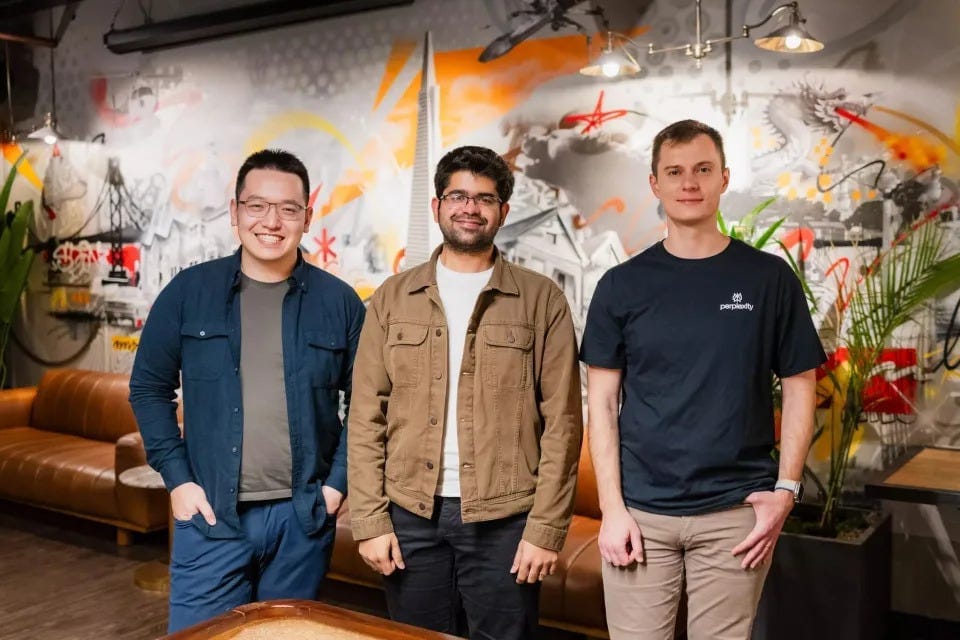
Founded in 2022, Perplexity AI didn’t try to beat Google at links — it replaced them with answers.
With a world-class founding team (ex-OpenAI, DeepMind, Google, Databricks, Meta), Perplexity built a conversational AI search engine focused on accuracy, references, and research-grade responses.
Its freemium model fuels growth:
• Free tier for casual users
• $20/month Perplexity Pro for power users (unlimited queries, premium models, file analysis)
The result?
📈 $20M ARR (April 2024)
📊 75M queries in early 2024 (US alone)
👥 Millions of users in months
🤝 Partnerships with SoftBank, Deutsche Telekom, Zoom, HP, Databricks
💰 Valuation now $2.5–$3B, backed by Nvidia & Jeff Bezos
The real edge: timing + UX + AI-native thinking.
This post skips the most important slides — growth mechanics, distribution leverage, and why Google couldn’t block it.
Dive into the full Perplexity AI breakdown to see how modern AI companies really scale.
✨ ICYMI — These Resources Blew Up This Week
Founders were scrambling for these drops—each one unlocked deal flow, investor access, or tactical fundraising shortcuts. If you missed them the first time, this is your chance to catch up before everyone else does.
Don’t wait. These are the kind of links founders bookmark—and competitors quietly use.
🔥 The Most Clicked Founder Resources
🔹 1000+ Angel Investors You Can Reach Today — One massive list to shortcut months of outreach.
🔹 Steal 100 Pitch Decks That Actually Closed — See exactly what winning decks look like.
🔹 101 Fintech VCs Most Founders Overlook — A free list built for fintech startups ready to raise.
🔹 300 Angels Backing Startups Right Now — A curated database for serious founders.
🔹 500 Ultra-Active Angels in One Place — Meet the angels writing checks this year.
🔹 Top 100 Angels You Should Pitch First — Your shortcut to high-signal early backers.
🔹 The 200 Angels Funding Fast-Growing Startups — A must-have list for early outreach.
🔹 The Pre-Seed Playbook Every Founder Needs — A practical guide to nailing your first raise.
🔹 2,500+ Verified Angels in AI & SaaS — Backers actively funding technical founders.
🔹 Fundraising Mistakes From a $13M Raise — Avoid the painful errors most founders repeat.
🔹 490 Real Pitch Decks That Raised Millions — Actual decks, actual funding, zero fluff.
🔹 Harvard’s Complete Startup Idea-to-Impact Guide — A must-read for builders refining their vision.
🔹 The Ultimate Fundraising Resource Stack — Everything you need to raise smarter, not harder.
Don’t just save these—use them. The founders who act fastest raise fastest. Want these in a searchable Notion library?
🦄 A Unicorn Built in 6 Hours
🦄 How Linktree Built a Unicorn With Simple Tech
Linktree didn’t win with complex engineering — it won by fixing a tiny, painful problem.
Instagram allowed one link in the bio. Creators needed many. Linktree aggregated them into one simple page — built in 6 hours.
Founded by Alex Zaccaria, Anthony Zaccaria, and Nick Humphreys, the team bootstrapped for 4 years, launched a freemium model, and unlocked viral growth: every Linktree page advertised itself.

💡 Why it worked:
- Clear pain → simple solution
- Freemium from day one
- Viral loop baked into usage
- Analytics dashboards kept users engaged
- Fast iteration driven by real user feedback
💰 The result:
- $165.5M raised
- $1.2B valuation (2022)
- Revenue grew to $25M, but with rising burn
This summary skips the flywheel mechanics, pricing psychology, and where Linktree’s model starts to break.
Explore the full breakdown to see what founders can copy — and what to avoid.
🔥WEB PICKS
🤖 OpenAI Quietly Pulled the Plug on Smart Routing
ChatGPT’s automatic reasoning switch was costing too much—and confusing users.
Now it’s back to speed-first models, with reasoning turned into a manual choice.
🟢 NVIDIA Just Took Over the World’s Most Important Scheduler
By acquiring the company behind Slurm, NVIDIA moved deeper into AI infrastructure.
Surprisingly, it’s keeping Slurm fully open source—for now.
👓 Meta’s AI Glasses Can Now Tune Out the Noise
In loud places, the glasses amplify only the person you’re talking to.
Think AirPods’ Conversation Boost—but built directly into smart glasses.
📊 Nearly Half of U.S. Workers Now Use AI at Work
AI adoption jumped again in just one quarter, according to Gallup.
What was “experimental” is quickly becoming everyday workflow.