|
|
|
You’ve iterated
your product.
You’ve practiced
your pitch.
But somehow...
your fundraising
deck still feels off.
|
|
You’re not sure
why. The numbers
check out. The
idea is good.
Still—something
isn’t
landing.
|
|
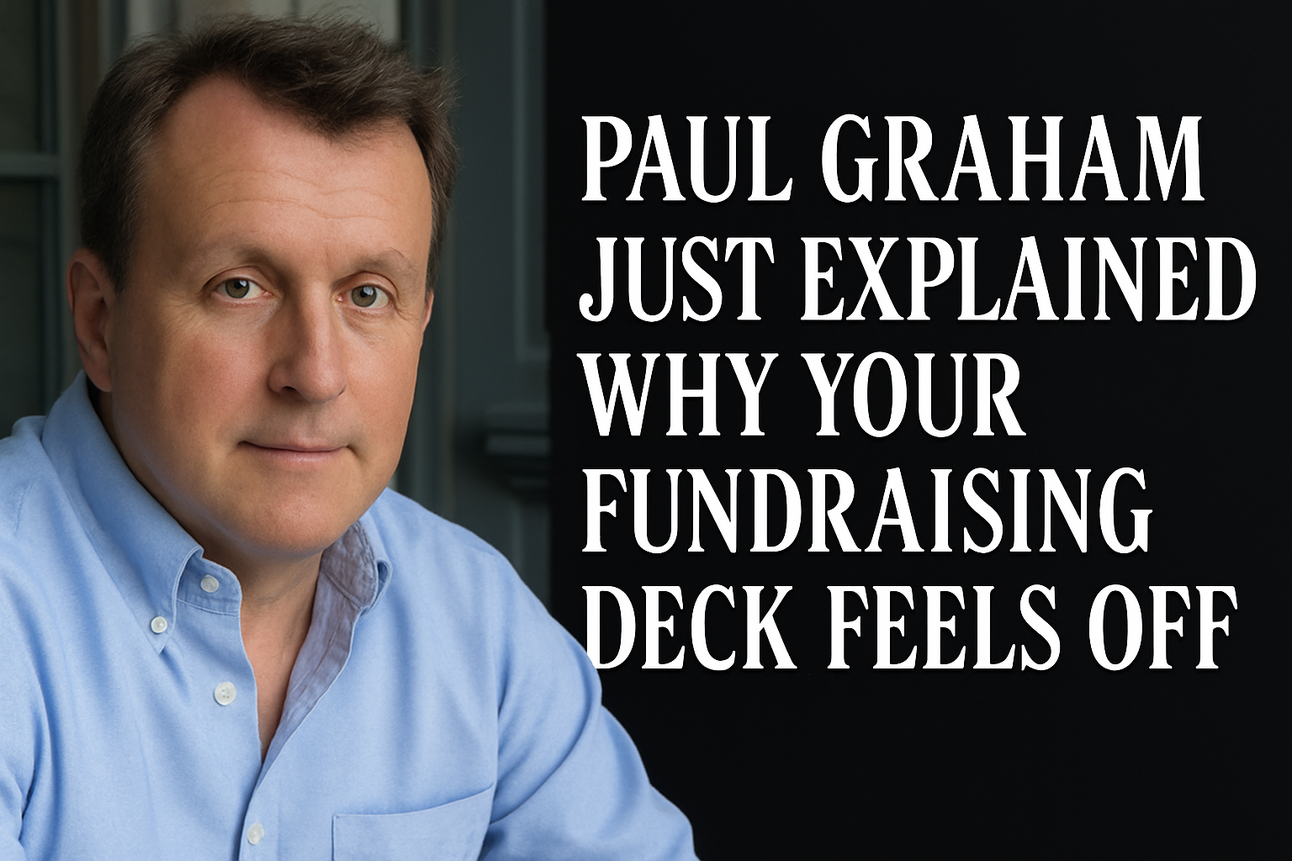
Paul Graham may
have just given us
the answer in his
essay “Good
Writing.”
|
|
His thesis?
|
|
“Writing
that
sounds
good
is
more
likely
to
be
right.”
|
|
|
|
|
|
At first, that
sounds like style
over substance.
But for founders,
it’s the
opposite.
The sound
of your
writing—your
phrasing, flow,
rhythm—is often
the first sign
that your thinking
isn’t fully
formed.
|
|
And that’s
exactly why your
deck feels
off.
|
✅
TL;DR for
Founders
|
|
Your
fundraising deck
isn’t a design
problem.
It’s not a data
problem.
It’s a thinking
problem.
✍️ And writing is
how you solve
it.
|
Here's what
Graham teaches
founders about
why this
matters:
|
1. Writing =
Thinking
|
|
Your pitch isn’t
just a summary.
It’s a tool for
clarity.
If a sentence
doesn’t flow, it’s
often because you
haven’t really
decided what
you're trying to
say.
|
|
“I
just
think:
‘Ugh,
this
doesn’t
sound
right—what
do
I
mean
to
say
here?’”
|
|
|
|
Founders often
hide fuzzy
thinking in bullet
points.
Graham would say:
rewrite until it sounds
clean—because that
means you’ve made
the idea
clean.
|
2. Clarity
Reveals
Confidence
|
|
Investors aren’t
just buying your
numbers—they’re
betting on your
clarity of
thought.
|
|
“The
writer
is
the
first
reader.”
|
|
|
|
|
|
If you can’t
reread your deck
50 times without
cringing at how
something’s
phrased, don’t
expect an investor
to find it
convincing
either.
|
3. Rhythm
Reveals
Priorities
|
|
Good decks have a
rhythm. They
mirror the shape
of insight.
|
|
Just like
writing, your deck
should reflect a
natural
progression of
thought.
It should feel
like a cleaned-up
train of
belief—not a
series of
disjointed
facts.
|
|
“The
rhythm
of
good
writing
has
to
match
the
ideas
in
it.”
|
|
|
|
|
|
If the
transitions feel
forced or abrupt,
you probably
haven’t decided what really
matters yet.
|
✍️ Graham’s
Unspoken Advice
to Founders:
|
-
Don’t write
your pitch
like a
summary.
-
Write it
like you're discovering
what
matters
most.
-
And keep
rewriting
until it sounds
undeniably
right.
|
|
“It’s
hard
to
be
right
without
sounding
right.”
—
Paul
Graham
|
|
|
Founders:
|
|
Next time your
pitch feels off,
don’t start with
Figma.
Start by
rewriting your
headline.
If it feels
wrong, it probably is
wrong.
|
|
If you write to
fundraise,
build, or
lead—read this
essay today:
Good Writing
by Paul
Graham
|
|
Want help decoding
more founder
writing frameworks
like this?
Subscribe
and we’ll bring
clarity to your
ideas—one sentence
at a time.
|