|
In partnership with
|

|
|
|
|
|
In This Edition:
|
|
|
|
|
|
STARTUP SPOTLIGHT
|
How One Founder Turned Failure
Into a $10 Billion Productivity
Revolution
|
|
|
|
What if the perfect tool for
your work didn’t exist—so you
had to build it yourself?
|
|
Imagine staring at a blank
screen, frustrated by the chaos of
scattered notes, endless to-do
lists, and rigid software that
never quite fits your workflow.
What if the answer wasn’t finding
a better tool, but creating one
from scratch?
|
|
That’s exactly what one founder
did.
|
|
In the early days, it was just an
idea—one that seemed too
ambitious, maybe even impossible.
The goal? To craft a digital
workspace that wasn’t just
functional but beautifully
designed, adaptable, and as
intuitive as Lego blocks for work.
But like every visionary idea,
execution was the real
challenge.
|
|
|
|
The first version? A flop.
|
|
The second? Not much
better.
|
|
Within two years, the entire
project was on life support.
Funding dried up. The team
dwindled down to just two people.
The founder packed up, left the
bustling startup scene, and
relocated to a quiet city across
the world to rebuild from scratch.
It was a last-ditch effort—a
gamble most wouldn’t take.
|
|
Would you have walked away or
started over?
|
The Moment Everything
Changed
|
|
Against all odds, the rebuilt
version struck a chord. Not
overnight. Not with fanfare. But
through quiet, organic
growth.
|
|
A small but passionate group of
users discovered it and became its
biggest evangelists. They didn’t
just use the tool—they loved it.
Recommended it. Built their own
workflows with it. And before
long, the momentum became
unstoppable.
|
|
No massive marketing campaigns.
No splashy PR. Just a product so
good that people couldn’t help but
share it.
|
|
By 2018, it was no longer a
hidden gem—it was a
movement.
|
From Cult Favorite to Global
Phenomenon
|
|
This wasn’t just another
productivity tool. It was a blank
canvas for thinkers, creators, and
builders. A space where you didn’t
have to conform to someone else’s
rigid system—you could design your
own. Writers, designers,
entrepreneurs, teams—each found
something different to love.
|
|
By 2020, the company behind it
was valued at over $2 billion. By
2023, that number had skyrocketed
to $10 billion.
|
|
But with scale came new
challenges. The very flexibility
that made it powerful also made it
intimidating for newcomers. Not
everyone wanted to build from
scratch—some just needed a system
that worked instantly.
|
The Balancing Act: Power vs.
Simplicity
|
|
The next evolution? A shift from
pure flexibility to thoughtful
guidance. The founder doubled down
on making the tool accessible to
both power users and
beginners.
|
|
For the builders—endless
customization. For the
overwhelmed—plug-and-play
templates.
|
|
It was a masterclass in scaling
without losing the product’s
soul.
|
|
And if you haven’t guessed by
now, we’re talking about Notion—and the relentless journey of
its founder, Ivan Zhao.
|
What’s Next—and What It Means
for You
|
|
As Notion looks ahead, AI-driven
automation, deeper collaboration
tools, and an even more seamless
experience are on the horizon. But
the heart of its success isn’t
just features—it’s an unshakable
commitment to thoughtful design,
continuous iteration, and
listening to the community.
|
|
So, what’s the takeaway for
you?
|
-
If your idea isn’t landing,
refine it. Pivot. Strip it
down to its essence.
-
If the market isn’t
responding, find the people
who will become your biggest
advocates.
-
If growth brings
complexity, simplify without
compromising your
vision.
|
|
Every founder faces moments of
doubt, setbacks, and reinvention.
The difference between those who
build something iconic and those
who fade away? The willingness to
persist, adapt, and keep
improving.
|
|
So, here’s the question: What are you building?
|
|
And more importantly—what’s stopping you?
|
|
Build, scale, and innovate with
Notion—the all-in-one workspace
trusted by thousands of startups
for docs, notes, project
management, and knowledge sharing.
For a limited time, get 3 months of the Plus plan +
unlimited AI
(worth up to
$3,000)! Unlock the Notion for Startups
offer today!
️
|
Free Notion and
Unlimited AI
|
|
|
|
Thousands of
startups use
Notion as a
connected
workspace to
create and share
docs, take notes,
manage projects,
and organize
knowledge—all in
one place. We’re
offering 3 months
of new Plus plans
+ unlimited AI
(worth up to
$3,000)! To redeem
the Notion for
Startups
offer:
|
-
Submit an
application
using our custom
link
and select Beehiiv
on the
partner
list.
-
Include our
partner key, STARTUP4110P67801.
|
|
Learn
More
|
|
|
|
|
|
CREATOR CATALYST
|
How Axios Sports Runs a Daily
Newsletter with Notion
|
|
In the fast-paced world of
sports, staying ahead of the game
isn’t just a challenge—it’s a
necessity. Every day, Axios Sports
delivers a high-quality newsletter
that keeps thousands of fans
informed, entertained, and
engaged. But how do they manage to
produce fresh, well-researched
content at such a relentless
pace?
|
|
The secret: an all-in-one system
built in Notion that streamlines
research, writing, and publishing.
And for creators looking to up
their content game, there’s a lot
to learn from their
playbook.
|
A Content Calendar That Works
for You, Not Against You
|
|
For Kendall Baker, Sports Editor
at Axios, managing a daily
newsletter means juggling 10+
stories at any given time. With so
much happening—yesterday’s
stories, today’s lineup,
tomorrow’s priorities—flexibility
is key. His Notion setup uses a
calendar database where each story
is its own page, tagged by sport
and content type. If something
shifts (and in the sports world,
that’s inevitable), he can simply
drag and drop stories to a new
date.
|
|
Lesson for creators:
Whether you’re running a
newsletter, YouTube channel, or
podcast, you need a dynamic
content calendar that helps you
plan without boxing you in. A
rigid system will slow you down,
but a flexible one keeps you
moving forward.
|
A Single Hub for Research,
Writing & Publishing
|
|
For a daily newsletter,
efficiency is everything. Kendall
and his team do all their work
inside Notion—from sourcing
articles with the Web Clipper to
writing and editing within each
calendar entry. Instead of
bouncing between apps, everything
happens in one place.
|
|
"I love opening a page while
still having the calendar in the
background," Kendall shares. "It
allows me to focus on a specific
story while staying on top of
breaking news."
|
|
|
|
Lesson for creators:
The fewer tools you need to switch
between, the better. A streamlined
workflow means you can spend more
time creating and less time
managing logistics. Find a system
that consolidates your research,
writing, and publishing in one
space.
|
Prioritizing What Matters
Most—Right Now
|
|
With a daily deadline, Kendall
needs to focus on the most
pressing stories. He uses a custom
database view that filters his
calendar to show only the stories
going out the next day. That way,
last-minute changes don’t derail
the entire workflow.
|
|
Lesson for creators:
Prioritization is everything. If
you’re juggling multiple projects,
create a system that highlights
what’s urgent so you never miss a
key deadline. A filtered view of
upcoming content helps you stay
agile.
|
Turning Ideas into Impactful
Stories
|
|
Great content starts with great
ideas. Kendall keeps an idea
database at the bottom of his
workspace, where each page
represents a potential story. He
jots down notes, collects sources,
and refines ideas over time. When
a concept is ready, he simply
drags it into the calendar to
schedule it for publication.
|
|
"Turning ideas into stories can
be a challenge, especially if they
live in different places," he
says. "Having an idea board and an
editorial calendar in the same
space keeps things from getting
lost."
|
|
|
|
Lesson for creators:
Ideas are your currency, and
losing track of them means losing
opportunities. Keep a running list
of ideas in a system that allows
for seamless execution when
inspiration strikes.
|
What This Means for You as a
Creator
|
|
Whether you’re writing
newsletters, producing videos, or
managing a social media brand, the
key takeaways from Axios Sports’
workflow are clear:
|
-
Have a flexible content
calendar
so you can adapt when things
change.
-
Consolidate your
workflow
so you’re not wasting time
switching between
tools.
-
Prioritize your most
urgent content
to stay focused.
-
Maintain an idea bank
to keep your creative
pipeline full.
|
|
At the end of the day, the best
content isn’t just about
inspiration—it’s about execution.
And a streamlined system is what
separates those who dream of
creating from those who actually
do it.
|
|
Are You Ready to Level Up Your
Content Game?
|
|
If you’re serious about building
a sustainable content business,
it’s time to rethink your
workflow. Take a cue from Axios
Sports and create a system that
works for you—not against
you.
|
|
How are you currently organizing
your content? What’s working, and
what’s not? Hit reply and let’s
talk about it!
|
|
|
|
AI BREAKTHROUGH
|
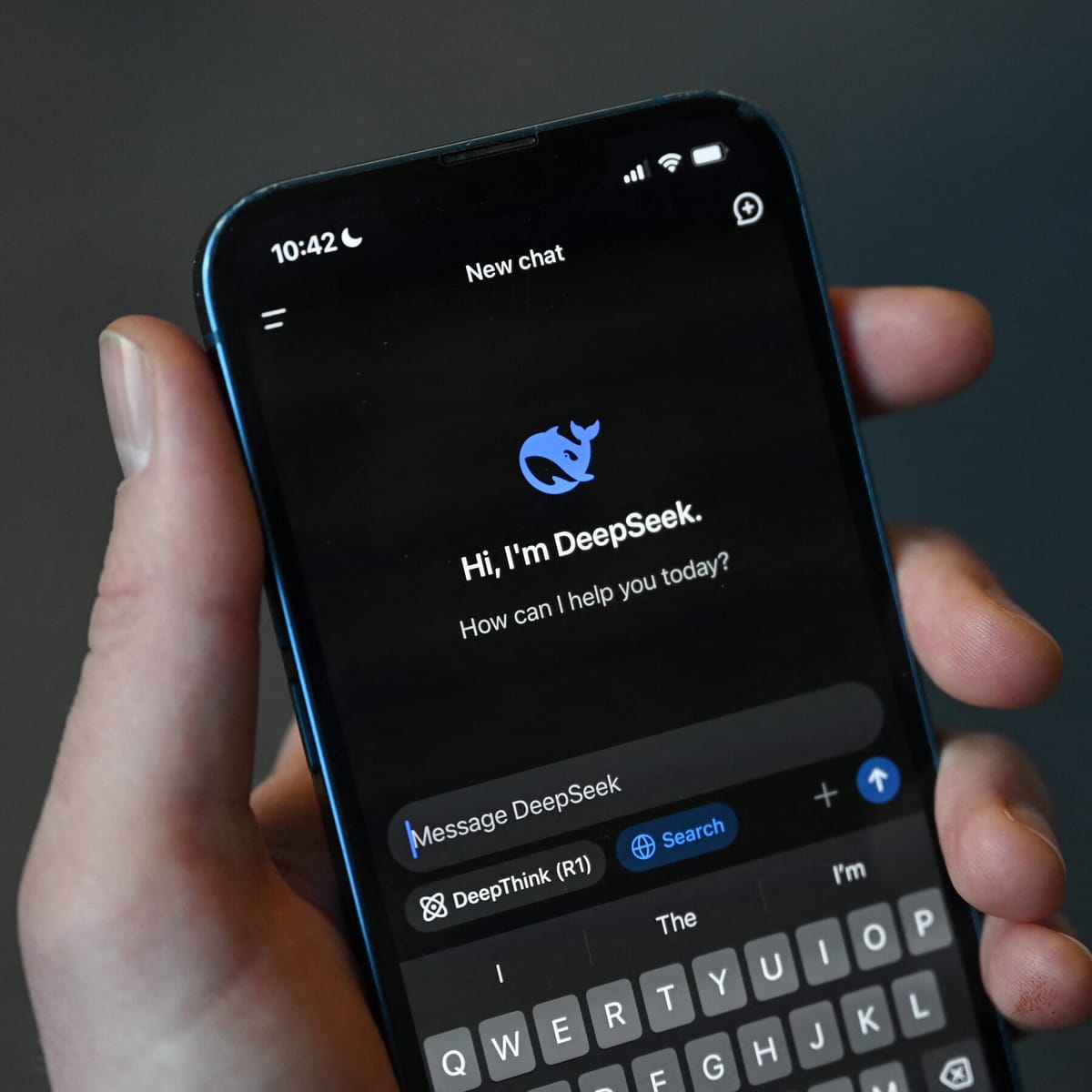
Startups Can Thrive as DeepSeek
Pushes AI Prices to the Breaking
Point
|
|
|
|
Let me tell you a story.
|
|
A few years ago, the AI landscape
was a fortress. The giants—OpenAI,
Google, Anthropic—had towering
walls of compute power,
proprietary data, and cutting-edge
models. The assumption? That no
one could catch up. If you wanted
access to top-tier AI, you either
paid the toll or got left
behind.
|
|
Then, DeepSeek happened.
|
|
Seemingly overnight, a new player
emerged—not just as another
foundation model, but as a force
shaking up the entire AI market.
An app climbing the charts, an API
slashing costs, and an open-source
approach that signals something
even bigger:
|
|
The moat is crumbling.
|
What This Means for Startup
Founders
|
|
First, take a deep breath. This
isn’t the end for AI startups—it’s
a beginning. If you play this right, you can
be on the winning side of this
shift. Here’s why:
|
1. AI Giants Are Now on Defense
|
|
DeepSeek is proving that models
don’t have to cost a fortune to be
powerful. The reaction? The
incumbents now have two
choices:
|
|
|
|
For startups, this means AI just got cheaper.
Whether you're building a consumer
app or a B2B tool, running
AI-driven products is about to
become much more affordable.
|
2. Open Source Isn’t Just Catching
Up—It’s Surging Ahead
|
|
For years, people assumed that
closed-source AI would always have
an edge. But DeepSeek is proving
that open-source models can not
only match
the performance of proprietary
models but leapfrog
ahead in some areas—all while
avoiding massive training
costs.
|
|
If you’re betting your startup’s
future on a foundation model with
sky-high CAPEX, it’s time to
rethink your strategy. The value
is shifting away from raw model
performance to how you integrate AI into
workflows and real-world use
cases.
|
3. AI Startups Just Got a Huge
Advantage
|
|
If you’re building an AI-powered
application, here’s your
edge:
|
-
AI models are
increasingly
commoditized
→ You can use whichever is
best, fastest, or
cheapest.
-
Your margins will
improve
→ AI costs are dropping, so
your profitability just went
up.
-
You can compete on
experience, not
infrastructure
→ The real differentiator
isn’t the AI model—it’s how
you use
it.
|
|
Startups that focus on customer experience, workflow
automation, and unique data
will outpace those fixated on the
model itself.
|
4. The New Moat: Data + Workflow
Lock-In
|
|
When technology gets
commoditized, value shifts
elsewhere. The real power now lies
in owning proprietary data
and embedding AI deeply into
customer workflows.
|
|
Think about it:
|
-
OpenAI built ChatGPT, but
who controls the customer relationships? AI-native apps.
-
Models are getting cheaper,
but what keeps users coming
back? Seamless integrations and
automation.
|
|
If you want to win in AI, build
something that users can’t
easily switch away from.
|
The Big Picture: More AI, More
Opportunity
|
|
There’s a principle in economics
called Jevons Paradox—when something becomes cheaper,
we use more of it. This applies to
AI, too. As models become more
accessible and cost-efficient, AI adoption will skyrocket.
|
|
For founders, this means two
things:
|
-
AI isn’t slowing
down—it’s about to explode
in new ways.
-
The real winners will be
those who move fast and
build products that users
can’t live without.
|
|
DeepSeek didn’t kill AI startups.
It just reshuffled the game in
their favor.
|
|
So ask yourself: Are you still
thinking like an AI model company,
or are you building something that
truly delivers value? The moat
isn’t the model. The moat is what you do with it.
|
|
|
|
|
|
|