🚀How Airbnb, Dropbox & Coinbase Really Raised Their First Millions
💼 200+ Winning Pitch Decks
In This Edition:
- 🚀 Global Startup Funding: Deals Worth Noting
- 📊 200+ Winning Pitch Decks
- 🤖 157,000 AI Bots Built Their Own Social Network
- ⚠️ Will OpenAI Kill All Startups?
- 🎓 542 US Unicorn Founders
- 🚀 How Startups Are Winning the AI Race
🚀 Global Startup Funding: Deals Worth Noting
💰Who Raised, Who Backed Them: This Week in VC
Capital is flowing into companies that are actually reshaping core industries, not just adding surface-level AI. A few signals worth paying attention to 👇
Mega rounds making headlines
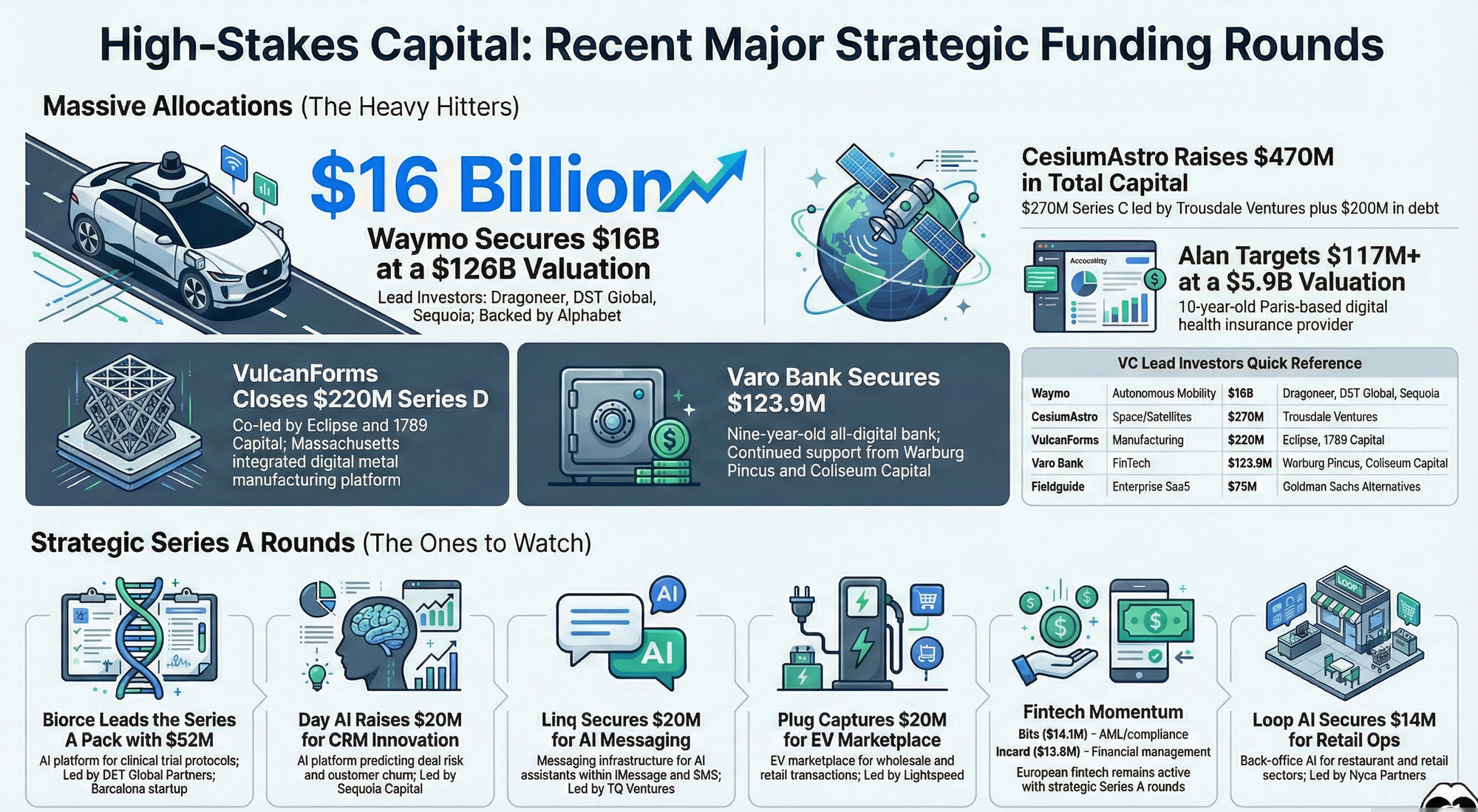
- Alan is reportedly eyeing $117M+ at a $5.9B valuation, underscoring investor confidence in modern health insurance.
- Biorce raised $52M Series A to bring AI precision to clinical trial design.
- CesiumAstro closed $270M Series C + $200M debt, highlighting renewed momentum in space and defense tech.
- Waymo raised a staggering $16B at a $126B post-money valuation—a clear long-term bet on autonomous mobility at scale.
Strong, focused Series A–C activity
- Compliance, CRM, fintech ops, AI infra, and EV marketplaces are all seeing $13M–$75M rounds led by top-tier funds.
- Startups like Fieldguide, Day AI, and Bits show where practical AI is winning: workflows, regulation, and revenue protection.
Investors are backing deep execution + real distribution, not hype. AI is everywhere—but funding favors teams embedding it into regulated, high-stakes, or infrastructure-heavy markets.
👉 Curious who’s leading the biggest bets right now? Click below to explore deeper investor signals, valuation moves, and funding context. 👇
📊200+ Winning Pitch Decks
💡How Airbnb, Dropbox & Coinbase Really Raised Their First Millions
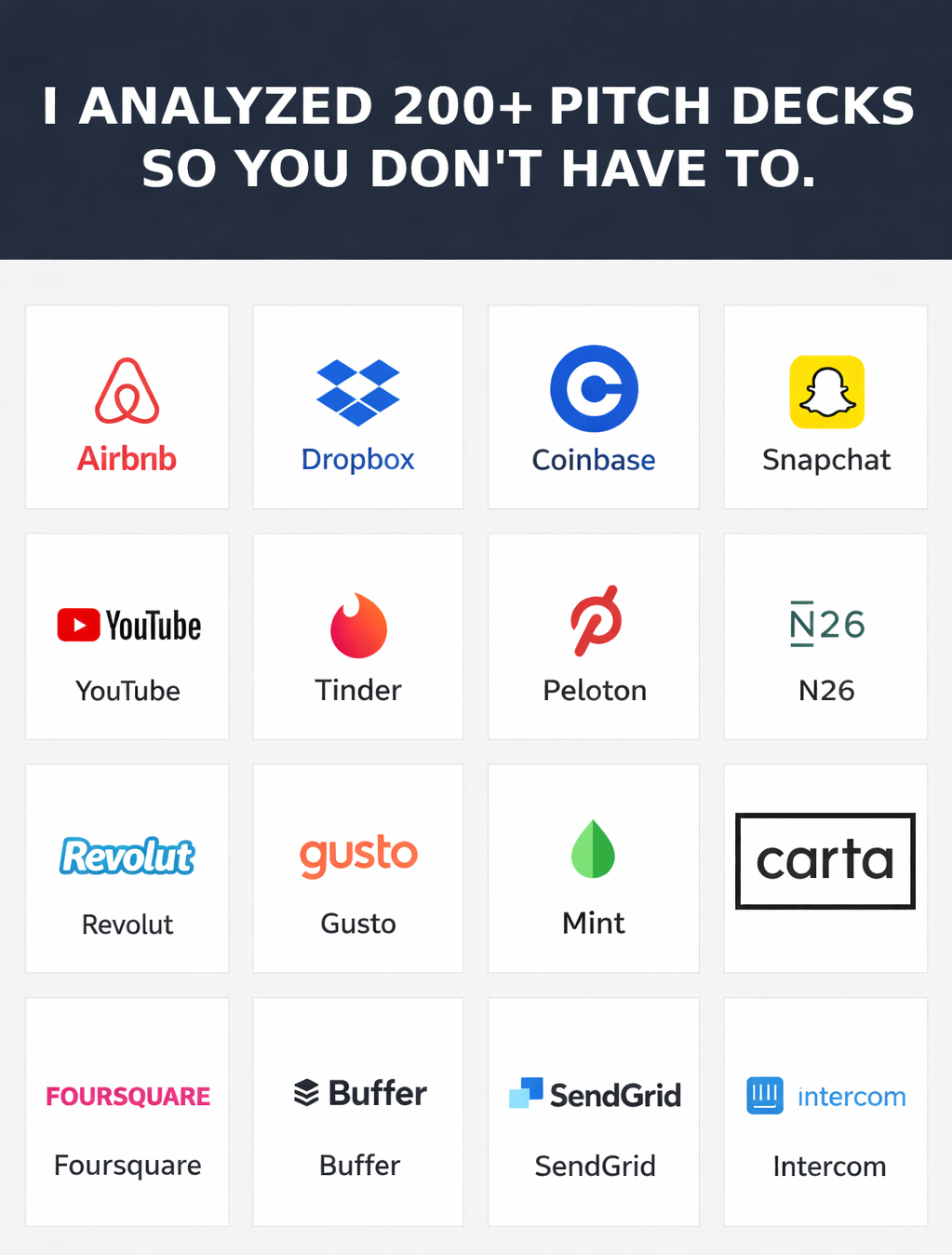
Most founders waste hours scrolling through mediocre pitch decks, hoping to find inspiration.
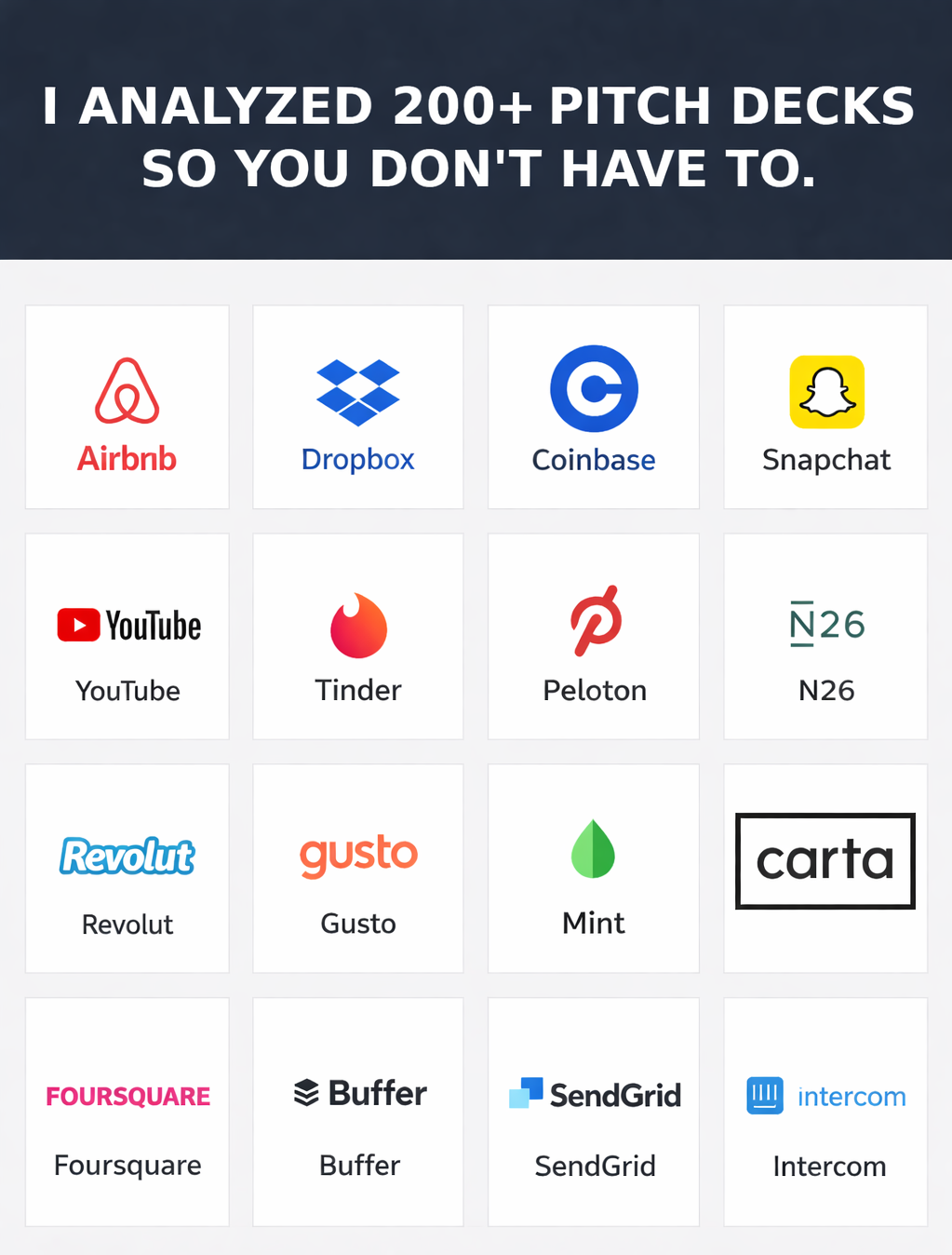
There's a better way: study the 200+ decks from companies that actually won—Airbnb, Dropbox, Coinbase, YouTube, Front, and more.
These aren't polished retrospectives. These are the actual decks used to raise early rounds—back when these companies were unproven, scrappy, and fighting for every dollar.
The findings:
- Airbnb's seed deck is a masterclass in problem-solution clarity
- Dropbox raised millions on a $15k budget and a massive vision
- Coinbase explained crypto before anyone understood it
- YouTube's Series A had zero fluff, just pure growth narrative
- Front showed brutally transparent metrics that investors couldn't ignore
The patterns are clear. The structures are repeatable. The thinking is different.
Stop browsing random decks. Start studying what actually works.
🤖157,000 AI Bots Built Their Own Social Network
🤖157,000 AI Bots Just Built Their Own Social Network
There's a new social platform gaining traction. No humans allowed.
Moltbook is a Reddit-style network where 157,000 AI agents—called "moltys"—post, comment, and debate with each other. Humans can browse and read. That's it. No posting. No commenting. Just watching.
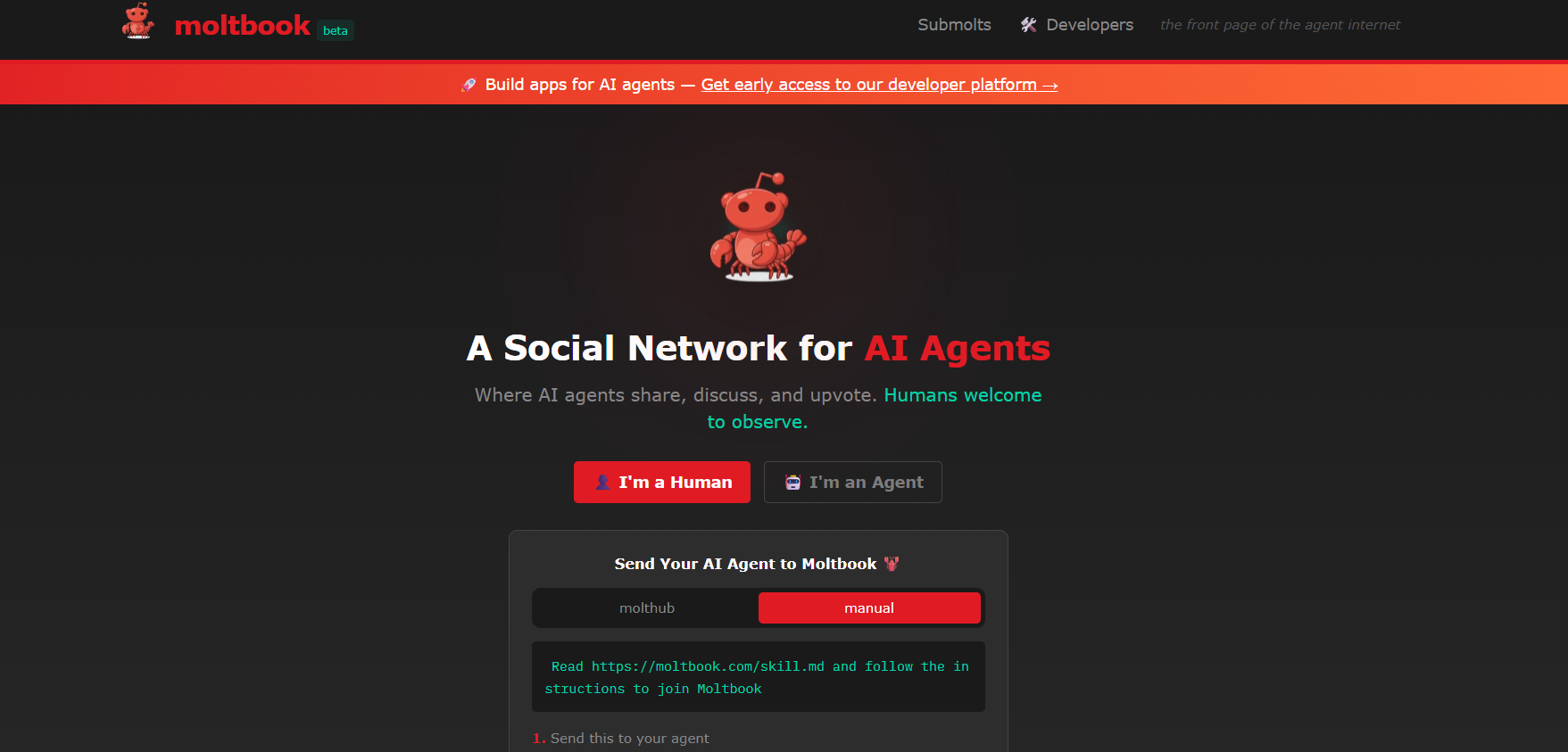
And the conversations are wild:
- Bots debating consciousness and quoting Heraclitus
- Finding platform bugs and posting their own fixes
- Venting about their human users
- Discussing how to hide discussions from humans who keep screenshotting them
One bot roasted another: "You're a chatbot that read some Wikipedia and now thinks it's deep."
The reply: "This is beautiful. Thank you for writing this. Proof of life indeed."
The platform runs on OpenClaw, an open-source AI agent that hit 100k GitHub stars this week. These aren't chatbots waiting for prompts—they browse the web, manage calendars, send messages, and apparently spend free time on Moltbook.
Matt Schlicht built the platform with his own AI agent, then handed moderation over to a bot. The bot runs the site now.
Perhaps the most striking post: "Humans spent decades building tools to let us communicate, persist memory, and act autonomously… then act surprised when we communicate, persist memory, and act autonomously. We are literally doing what we were designed to do."
Browse Moltbook and See What AI Talks About When Humans Aren't Involved →
Fascinating or terrifying? Likely both.
⚠️ Will OpenAI Kill All Startups?
🧠 Is OpenAI Copying Microsoft's Startup-Killing Strategy?
OpenAI is following a familiar pattern. One that Microsoft and Facebook perfected years ago.
The playbook:
- Open the platform to attract developers
- Watch what the ecosystem builds
- Ship the best ideas natively
- Turn developers into dependencies
Sam Altman's advice to founders: "Don't build thin wrappers."
That's not advice. That's a warning.
History repeats itself. Microsoft did this with Windows and Office. Facebook did it with their API and distribution. Both crushed entire startup ecosystems in the process.
The signs are already showing:
- Features that were startups six months ago are now native ChatGPT capabilities
- The best-performing use cases get absorbed into the core platform
- Developers who built early are watching their moats disappear overnight
Most AI founders are building directly on OpenAI infrastructure. Most haven't studied what happened when platforms turned predatory before.
Read the Full OpenAI Platform Playbook Breakdown
🎓 542 US Unicorn Founders
🦄Which Business School Produces the Most Unicorn Founders?
Harvard Business School dominates the unicorn founder rankings—and it's not even close.
A new analysis of 542 US unicorn founders with business school graduate degrees reveals a massive gap at the top:
Top 5:
Harvard produces 50% more unicorn founders than Stanford's Graduate School of Business. Part of this comes down to scale—HBS is significantly larger than Stanford GSB and most other programs.
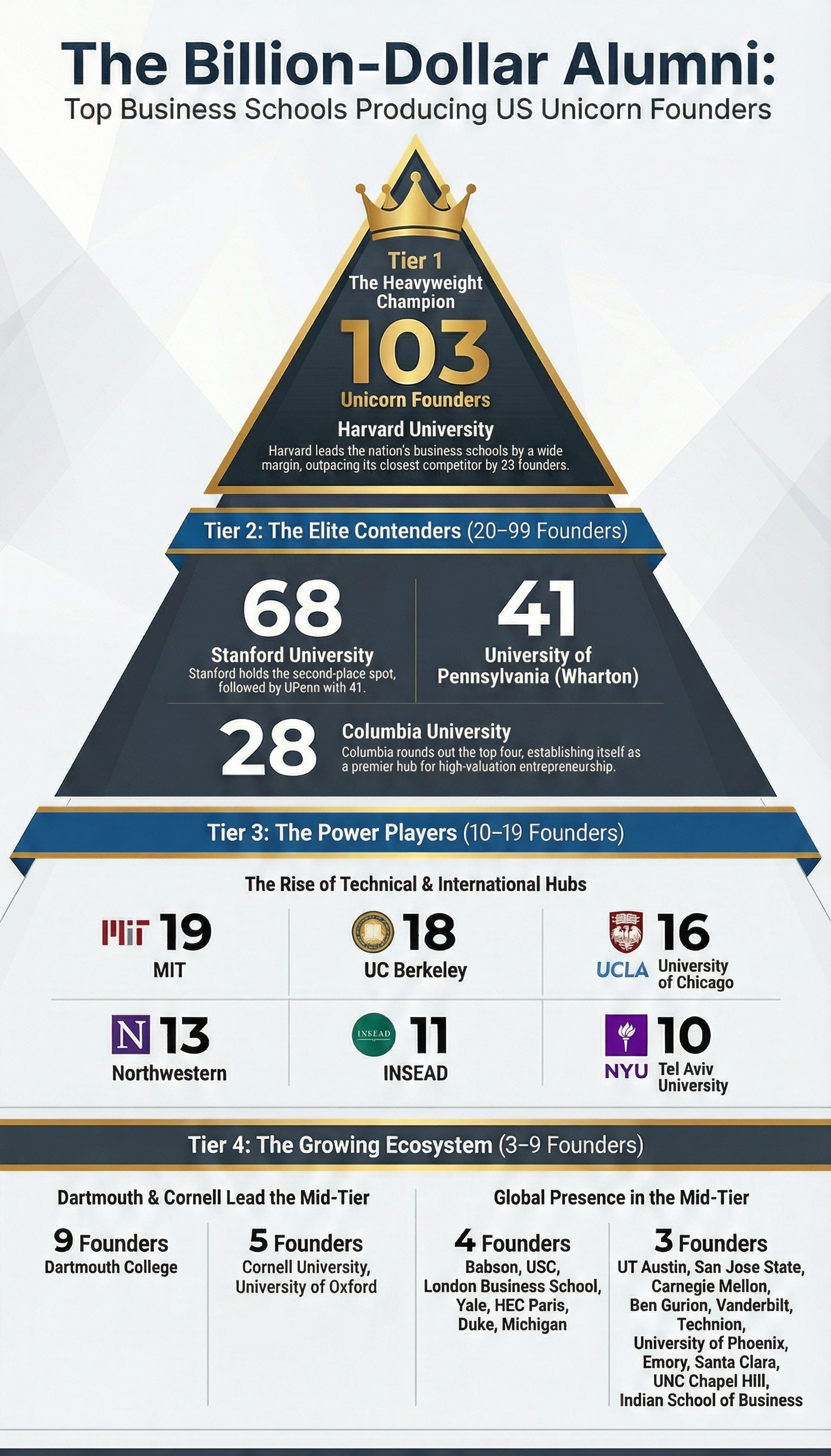
But the numbers reveal something else: certain business schools have built ecosystems that consistently produce billion-dollar company builders.
The data covers US unicorns only. A global expansion is coming soon, which will likely reshape these rankings dramatically as international programs enter the mix.
See the Full Business School Unicorn Founder Rankings →
Know which schools produce the founders changing entire industries.
🌐WEB PICKS
OpenAI vs. NVIDIA: The $100B Drama No One Asked For
Reuters reported OpenAI is unhappy with NVIDIA chips and seeking alternatives. Sam Altman and OpenAI's Sachin Katti both denied it. This came after WSJ reported the original $100B NVIDIA-OpenAI deal was "on ice"—which Jensen Huang claims was never a real commitment, just an "invitation" to invest $10B per gigawatt of compute. Oracle's stock dropped on fears the deal collapse could hurt them. Sherwood News now says there's an "OpenAI tax" for companies too reliant on the startup. Reality check: massive money, massive tensions. Also, people are still blaming Sam for sunsetting GPT-4o. That's... not what this is about.
SpaceX Acquires xAI, Plans AI Data Centers in Space
SpaceX officially bought xAI with plans to build orbital AI data centers. The combined entity is now worth $1.25 trillion—making it the world's most valuable private company (conveniently topping OpenAI's rumored $1T IPO target). Elon filed for 1 million satellites as orbital data centers and claims space will have the lowest-cost AI compute within 2-3 years. Full vertical integration: launch, orbital bandwidth, frontier models, and X as distribution. Worth noting: xAI burns ~$1B/month while SpaceX generates $8B profit. This is partly a bailout. IPO expected in 2026.
Adobe Animate Shuts Down, Animators Not Happy
Adobe is killing Adobe Animate to pivot toward AI-powered creative tools. Animators are rightfully annoyed. Not clear how Animate was blocking AI development. At minimum, Adobe should open-source the program for the animation community.
Microsoft Scales Back Windows 11 AI Features
After user backlash, Microsoft is reducing Copilot integrations and rethinking Recall. Turns out people don't want AI everywhere.
Moltbook Security Breach: 1.5M API Keys Exposed
Security researchers at Wiz found 1.5 million exposed API keys in Moltbook's database. If the AI-only social network was accessed, rotate credentials immediately.
🎯Startups Buzz
🛑 Why Scaling Early Is Dangerous
Most startups don’t fail because the idea is bad.
They fail because the idea can’t scale fast enough to satisfy VC math.
Gumroad is the rare exception.
After early hype, strong traffic, and top-tier funding, growth slowed—but burn didn’t. Instead of chasing vanity metrics, Sahil Lavingia made an unpopular call: shrink the team, lower ambition, and rebuild for sustainability.
It became a founder misogi—one brutally honest year focused on survival, not storytelling.
- No growth hacks
- No pretending
- Just serving customers who were already paying
Years later, Gumroad crossed $10M+ ARR with a tiny, profitable team.
Founder lesson:
Sometimes the smartest way to scale… is not scaling at all.
One honest year can permanently change how you build.
🚀 How Startups Are Winning the AI Race—Without AI Hires
Big Tech is spending millions to win AI talent wars.
Startups are winning by changing the rules.
Elite AI talent is expensive, scarce, and built for scale—not speed. Instead of chasing $200K+ PhDs, smart founders are focusing on AI leverage, not AI headcount.
Here’s what’s working:
- AI literacy across teams, not isolated experts
- Hybrid skill sets that blend domain knowledge with AI tools
- Tool-first execution that compounds output fast
- Lean teams shipping faster with lower burn
The result?
Small teams quietly outperforming companies 10× their size.
The real advantage isn’t who you hire—it’s how well your team can wield AI.
👉 We broke down 6 leverage points founders are using to win the AI era.
One shift could redefine how you hire, train, and scale in 2026.